Get Full Government Meeting Transcripts, Videos, & Alerts Forever!
Get email alerts on the Highway 18 Safety topic
No spam. Unsubscribe anytime.
South King County officials urge lawmakers to keep $640 million Highway 18 safety improvements on schedule
Summary
City and regional officials, firefighters and chambers asked the committee to preserve previously committed funding and WSDOT's construction timeline for Highway 18 safety and mobility improvements, citing rising fatalities and heavy freight use.
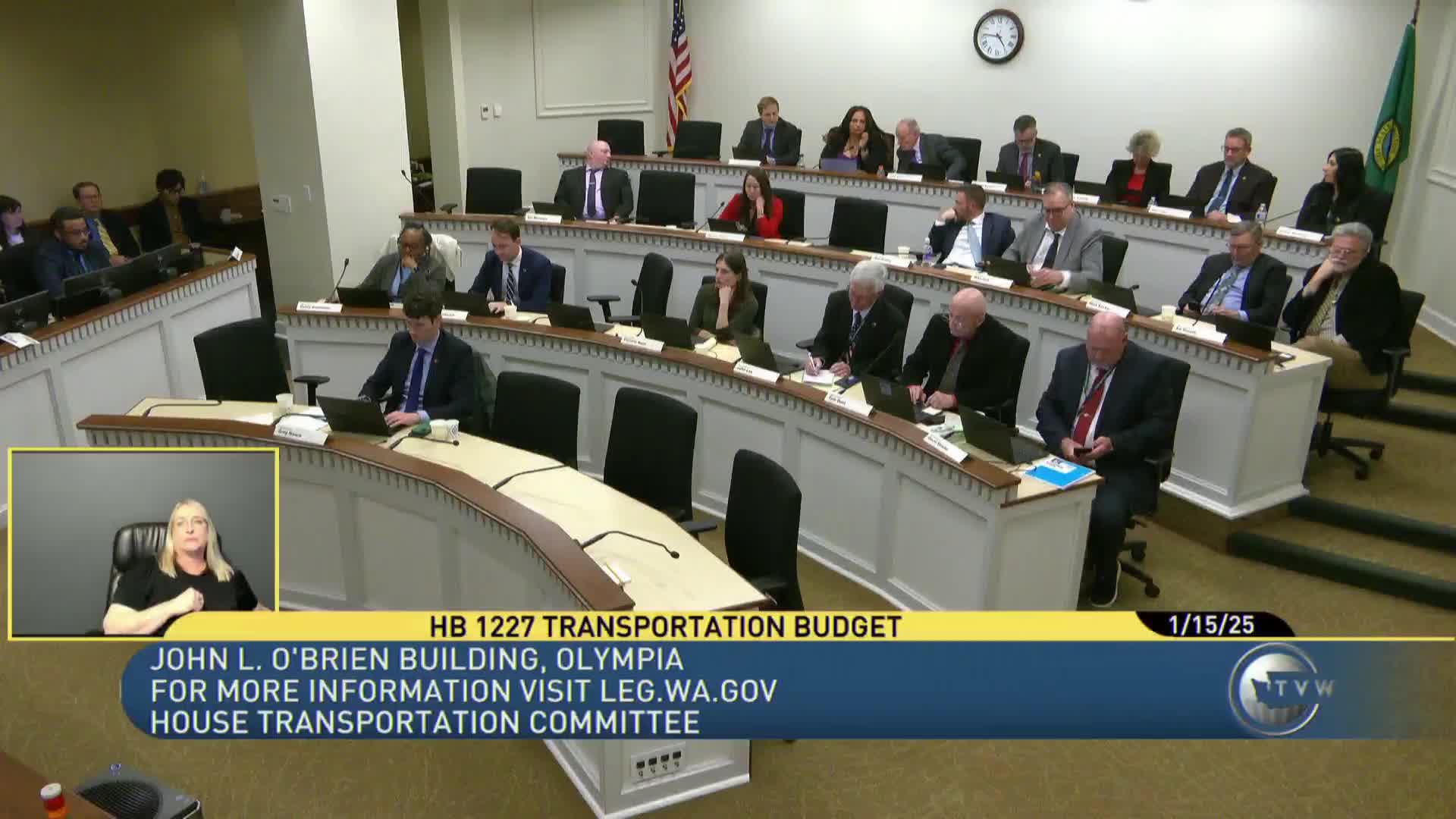
Local leaders, emergency responders and a Southeast King County coalition told the committee that Highway 18 between I‑90 and I‑5 needs to remain on WSDOT's construction schedule and funding plan.
Nut graf: Testimony from the Southeast Area Legislative Transportation Coalition, Covington's mayor and Eastside Fire and Rescue emphasized safety concerns and rising fatalities on Highway 18, and asked the legislature to maintain the $640,000,000 commitment for safety improvements from Deep Creek to Tiger Mountain Summit.
Jeff Wagner, mayor of Covington and representative of the Southeast Area Legislative Transportation Coalition, said the legislature had committed $640,000,000 for safety improvements and urged the committee to "keep all that funding for this project in alignment with WSDOT's timeline. Any delay in the project due to unavailable funds will be devastating." Assistant Chief Will Aho of Eastside Fire and Rescue described responding to fatal crashes along the unimproved stretch and said data show a 600% increase in fatalities in the project area over five years and a 120% increase in overall incidents compared with the nearest divided area.
Ending: Witnesses asked the committee to preserve project funding and schedule so WSDOT can proceed with construction and communities and emergency responders can benefit from reduced casualties and improved freight and commuter mobility.