Get Full Government Meeting Transcripts, Videos, & Alerts Forever!
Get email alerts on the Child Welfare Placement Hotels topic
No spam. Unsubscribe anytime.
DHS seeks to curb hotel placements for children but hospitals are strained as alternatives lag
Summary
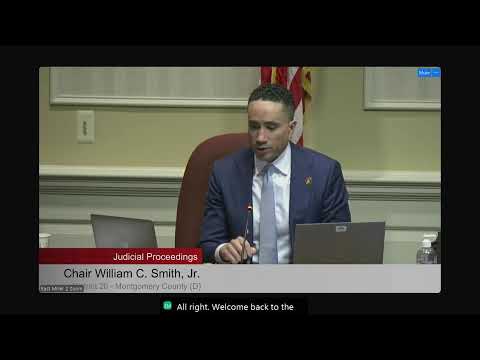
The Maryland Department of Human Services told the Senate Judicial Proceedings Committee that it will move to sharply limit the use of hotels and other unlicensed settings for youth in state custody, but hospital and child‑welfare witnesses warned that Maryland currently lacks sufficient licensed, therapeutic or kinship placements to absorb children if hotels are eliminated immediately.
The Maryland Department of Human Services told the Senate Judicial Proceedings Committee that it will move to limit use of hotels, motels and other unlicensed settings for youth in state custody and prioritize kinship and other in‑state placements.
Secretary Rafael Lopez said on Jan. 14 that his department has cut hotel stays but still sees children placed in hotels and hospital “overstays,” and that SB 191 would codify guardrails to make such placements exceptional and temporary. "A hotel is never an acceptable setting for any child to live in," Lopez said, adding the goal is to reduce the practice toward zero while expanding appropriate placement capacity.
Child welfare advocates, defense attorneys and public health providers urged caution, saying the state does not currently have enough community‑based or therapeutic placements to take children out of hotels overnight. Hospital physicians and social workers told the panel that children are being kept for weeks or months in emergency departments and inpatient beds past medical necessity because there is nowhere else to send them. "These are 8‑by‑10 rooms; we are housing kids, not treating them," said Dr. Lauren Fitzpatrick, medical director of pediatric inpatient and emergency services at Anne Arundel Medical Center.
Why it matters: Supporters say the bill will make the department accountable and reinforce a preference for kinship and family placements; opponents warn that removing hotels without adding placements will push more children into hospitals, which cannot replicate schooling or therapeutic supports and increase costs. Hospitals reported dozens of pediatric overstay cases and described harmful effects on children's education, socialization and mental health.
What the bill would do: SB 191 would limit DHS authority to place children in unlicensed settings and require documentation of efforts to secure licensed placements; it also would keep a narrow exception process when an immediate out‑of‑state or other interim option is needed. Department witnesses said an amendment clarifies payment rules when rare exceptions are authorized. Advocates opposed language they said could be read to allow courts to retroactively sanction unlicensed placements and thereby undermine federal disability obligations.
Evidence and debate: DHS said that as of Jan. 10 the state had 29 youth in hotels (under 1% of roughly 3,652 children in care) and that kinship placements have risen under recent policy changes. Hospital representatives said their own internal data showed dozens of pediatric overstays — patients held beyond medical necessity, sometimes for months — because no appropriate placement is available. Disability Rights Maryland and class‑action counsel argued in testimony that the bill could enable judicial findings that would justify otherwise unlawful placements and would circumvent Americans with Disabilities Act obligations to place youths in the most integrated appropriate settings.
Looking ahead: Committee members pressed DHS for data on bed types and on how many contracted beds are staffed and immediately available. DHS said it is pursuing primary‑prevention investments, kinship licensing changes and higher provider rates to broaden available options — and asked for regulatory and budget flexibility to implement changes. Advocates asked for a workgroup or study to produce evidence‑based alternatives before legislative changes take effect.
Ending note: The bill prompted a broad and sometimes tense hearing that underscored a central practical problem: most stakeholders agree hotels and long hospital stays are harmful, but they sharply disagree about how quickly the state can or should remove the practice without creating new harms.