Get Full Government Meeting Transcripts, Videos, & Alerts Forever!
Get email alerts on the Judicial Appeals Court Orals topic
No spam. Unsubscribe anytime.
Appeals Court Hears Whether Attorney’s Lien Can Be Paid from City Judgment When No Proceeds Exist
Summary
The Massachusetts Appeals Court heard argument in Matter 23P1256 over whether an attorney’s lien under Mass. Gen. Laws ch. 221 §50 can be enforced against the City of Beverly where the city holds a larger judgment and the defendant creditor (Bass River Golf Management) has no funds to pay.
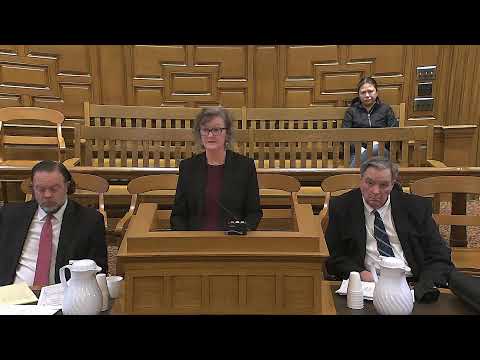
The Massachusetts Appeals Court on Monday heard argument in Matter 23P1256, City of Beverly v. 31 Tozer Road LLC and others, on whether an attorney’s lien can require the city to pay legal fees when there are no proceeds available from the defendant. The three-judge panel, including Justices Desmond, DeAngelo and Toon, presided over the argument.
The case centers on a dispute over an attorney’s lien claimed by Attorney Dennis Sullivan, who represents a client that obtained a smaller judgment against the city after a jury verdict. Sullivan told the court the lien “is prior in time to the judgment” and argued the statute was rewritten by the Legislature to make liens relate back to the original filing, giving his claim priority over the city’s later judgment. He said the lien should be enforced even where the city has not been paid by the defendant, Bass River Golf Management Incorporated.
The issue matters because the city holds a larger execution on a separate judgment — which the parties and counsel described as roughly $2,000,000 — while Sullivan’s client’s judgment was described in briefing and argument as about $70,000 and Sullivan said the attorney’s lien at issue was about $20,000–$21,000. The city solicitor, Stephanie Williams, told the court, “There are no proceeds in this case. Bass River has not paid the city a penny of what is now the $2,000,000 judgment.” Williams argued that the attorney’s lien statute should be read to require proceeds — money actually available to pay — before a court may enforce payment to an attorney.
Williams explained that when there are competing executions, the mechanics of Chapter 235, Section 27 govern how a sheriff applies executions and how setoffs operate, and she said those procedures mean an attorney cannot simply ask the court to create proceeds for the purpose of enforcing an attorney’s lien. Williams also told the panel that the city filed a supplementary process action in Taunton District Court and that the district court recently found Bass River Golf Management had no ability to pay the city’s $2,000,000 judgment; she offered to file the district court’s order as a post-argument submission to complete the record.
Sullivan acknowledged the lack of case law applying the statute in many of these factual permutations and relied on prior decisions, drawing the panel’s attention to precedent that treats the lien as capable of relating back to earlier filings. He argued that requiring actual escrowed proceeds in every case would render the attorney’s lien statute ineffective in many ordinary civil cases because parties do not ordinarily set aside funds while litigation is pending. Williams countered with a statutory-construction point: a judgment alone does not create proceeds and there are established collection processes (supplementary process, levy by sheriff, trustee process) that must occur before proceeds exist and can be distributed.
The judges questioned both sides about whether the Superior Court has authority to order the city to pay an attorney where the underlying defendant has no assets, and whether the statute’s three alternative bases (a claim, a judgment/decree, and proceeds derived therefrom) require proceeds to be available. The panel also discussed prior cases the parties cited — including a Northeast Avionics v. City of Westfield matter and a decision involving escrowed settlement funds — to explore how courts have enforced liens when settlement funds or escrow were present.
No ruling was made from the bench. The panel recessed after argument and invited a post-oral-argument filing of the Taunton District Court order; the city solicitor offered to file that order within seven days. The Appeals Court will issue a decision after considering the briefs, record and any supplemental filing.
Matter: 23P1256, City of Beverly v. 31 Tozer Road LLC, et al.