Get Full Government Meeting Transcripts, Videos, & Alerts Forever!
Get email alerts on the Evictions topic
No spam. Unsubscribe anytime.
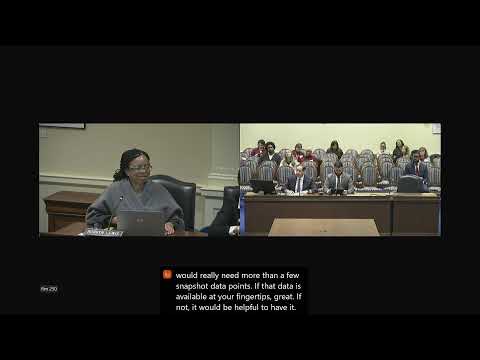
Tenant advocates say Maryland faces an eviction crisis; praise access-to-counsel and tenant safety law
Summary
Legal aid, NAACP and community organizers told the committee that eviction filings remain high, that access-to-counsel programs show strong results and that the tenant safety law’s rent‑escrow consolidation is already being used in cases.
Speakers from Maryland Legal Aid, Renters United Maryland, NAACP and CASA told the Environment and Transportation Committee that eviction filings are widespread, disproportionately affect Black renters and that recent tenant protections and legal aid investments have shown measurable results.
"Maryland unfortunately is experiencing an eviction crisis," Zafar Shah, advocacy director for the Human Right to Housing program at Maryland Legal Aid, said during the panel. He cited litigation and market forces that put additional pressure on renters, including a Department of Justice complaint involving commercial pricing software used by some owners.
Data presented to the committee included a DHCD figure cited by advocates that more than 255,000 eviction warrants were filed between October 2023 and September 2024 and nearly 16,000 executed evictions during that period. David Wheaton of the NAACP’s testimony highlighted racial disparities: neighborhoods with higher shares of Black renters saw significantly higher rates of no-cause eviction warrants and executed no-cause evictions.
Advocates pointed to the Access to Counsel and Evictions (ACE) program evaluation: the panel reported that 88% of tenants who obtained counsel and wanted to remain in their homes were able to do so in ACE-covered cases, and the program generated estimated net fiscal benefits by reducing shelter and other costs. They warned, however, that ACE funding is scheduled to sunset in fiscal 2027 and urged lawmakers to maintain or extend support (House Bill 103 was cited as a vehicle to lift the sunset).
CASA described early, concrete uses of the Tenant Safety Act (effective Oct. 1) to consolidate rent‑escrow proceedings for groups of tenants in shared buildings. CASA said its legal team consolidated cases for tenants at a Riverdale property and for 29 tenants at Parkside Landing in Rockville; many of those tenants have filed in rent escrow and, CASA said, subsequently received lease nonrenewals or eviction notices while proceedings continue.
Advocates urged the committee to consider maintaining eviction prevention funding, extending ACE support, monitoring the impact of increased filing fees and considering statutes such as good-cause eviction proposals that several speakers and written commenters recommended for 2025.
The panel combined data on filings and evictions, case outcomes from ACE and legal-service case studies to show both the scale of displacement risk and the short-term effectiveness of legal assistance and consolidated rent-escrow remedies.