Get Full Government Meeting Transcripts, Videos, & Alerts Forever!
Metro Arts committee rescinds funding formula, adopts 75% scaled rank-order model for Thrive grants
Summary
The Metro Arts Grants and Funding Committee voted to rescind its prior Thrive funding formula and adopt a scaled, rank-order model that reduces each Thrive request to 75 percent and funds applications from the top score down until the Thrive allocation is spent.
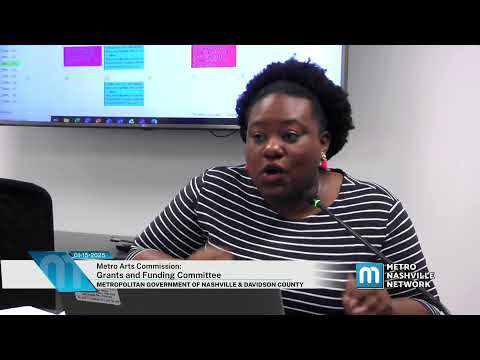
The Metro Arts Grants and Funding Committee, chaired by Commissioner Heather Lefkowitz, voted during its January meeting to rescind the previously adopted Thrive funding formula and replace it with a model that scales applicant requests to 75 percent and awards grants in rank order until the Thrive allocation is exhausted.
The change follows a presentation by Ashley Batchelder of the Metro Human Relations Commission detailing application volume and budgetary context. Batchelder told the committee that Metro Arts received roughly 200 Thrive applications and 109 general operating applications for the current cycle, and that the committee-authorized allocation to Thrive stands at about $1,300,000. She said the current pool of requests substantially exceeds available funds and summarized two possible responses: keep a $10,000 per-project cap and redistribute any surplus, or rescind the cap and adopt a scaled, rank-order approach. "Every organization that receives an eligible score will be funded," Batchelder said while describing the intent behind the funding model and the estimates used in staff analysis.
Why it matters: committee members framed the change as a response both to the recent Title VI complaint and to historic concentration of Metro Arts funding. Batchelder referenced the MHRC Title VI review and said the new policy seeks to redirect larger shares of funding toward smaller organizations and individual artists, reversing a pattern in which a small group historically…
Already have an account? Log in
Subscribe to keep reading
Unlock the rest of this article — and every article on Citizen Portal.
- Unlimited articles
- AI-powered breakdowns of topics, speakers, decisions, and budgets
- Instant alerts when your location has a new meeting
- Follow topics and more locations
- 1,000 AI Insights / month, plus AI Chat