Get Full Government Meeting Transcripts, Videos, & Alerts Forever!
Get email alerts on the Interim Executive Director topic
No spam. Unsubscribe anytime.
Metro Arts executive committee recommends Ashley Batchelder as interim executive director amid grants and staffing crunch
Summary
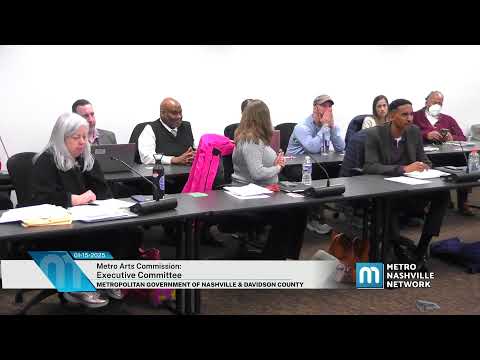
The Metro Arts Commission Executive Committee on Monday voted to recommend Ashley Batchelder as interim executive director after Interim Director Dr. Coleman resigned, the committee said.
The Metro Arts Commission Executive Committee on Monday voted to recommend Ashley Batchelder as interim executive director after Interim Director Dr. Coleman resigned, the committee said.
The recommendation — which must be approved by the full Metro Arts Commission — grew from concerns that the department lacks a single leader to run an accelerated FY25 grants cycle and to advance multiple open staff searches. “I do think it is absolutely imperative at this point that there be another interim executive director appointed,” Director Hall told the committee as he recommended an internal appointment.
The recommendation followed a briefing from Metro Human Rights Commission (MHRC) staff on the final steps of a conciliation agreement and an earlier grants committee meeting that produced an amended, accelerated grants timeline and several policy adjustments. Committee members said the timeline and the pending legislative filing require immediate operational leadership. Secretary Heather Lefkowitz told the committee she would work with staff to file revised legislation by Friday at noon.
Metro Human Resources Director Hall said Metro staff considered outside candidates but recommended an internal interim because an internal leader would already know civil-service hiring rules, Metro finance processes and the interagency relationships needed to execute the grants timeline. Hall identified Batchelder — an MHRC employee who has been deeply involved in the conciliation-working group and the grants work — as “the only person that I know that could operationalize that very vital process” and said Batchelder had agreed to be considered.
Batchelder told the committee she was willing to serve if the commission asked her to. “If it is the will of the commission to ask me to serve, in this interim position, then I am prepared to do that,” she said. Committee members praised Batchelder’s familiarity with the grants work, her relationships across Metro, and her experience with community-facing and equity work.
After a motion to recommend Batchelder was made and seconded, the committee approved the recommendation by voice vote. The committee recorded the outcome as a recommendation to the full commission; the full commission must vote to make the appointment official.
Committee members and staff also reviewed the status of several department recruitments. Director Hall reported the finance and operations posting had produced 309 qualified applicants, 14 of whom were in the top tier for consideration; the public information manager posting produced 45 qualified applicants with 17 in the top tier. The public-arts manager search was paused and will be reposted after an administrative error compromised the integrity of the earlier recruitment. Hall said the hires are civil-service positions and that an appointing authority (the executive director) is needed to advance supplemental questions and interview panels quickly.
Committee members stressed that hiring an interim executive director is intended to shorten the time to fill leadership roles and to provide an appointing authority able to move civil-service processes forward. Hall described the likely administrative pathway: Batchelder would take a temporary leave from MHRC to serve as interim director and would return to her prior position once a permanent director is hired.
In addition to the appointment recommendation, the grants committee asked the executive committee to delegate authority for a short period to Secretary Lefkowitz to work with staff and Metro Legal to finalize and file the grants-related legislation required by council. Tessa Ortiz, a Metro Legal representative who has worked on the conciliation agreement, told the committee that the commission’s policy choices will drive operational steps for the director and staff.
Committee members said they will continue to meet frequently over the next months to set clear policy and timelines for outreach, panel processes and grant disbursement so staff can operationalize commission directives.
The matter moves to the full Metro Arts Commission for final action; the executive committee recorded the recommendation as approved by voice vote and recorded no roll-call tally in the meeting transcript.