Get Full Government Meeting Transcripts, Videos, & Alerts Forever!
Get email alerts on the TCJA Expiration Conformity topic
No spam. Unsubscribe anytime.
Officials outline how expiring TCJA provisions could affect Minnesota tax calculations and PTE tax
Summary
Department of Revenue staff briefed the Senate Taxes Committee on how expiring provisions of the federal Tax Cuts and Jobs Act could affect Minnesota tax calculations, forecasting and the state pass‑through entity tax.
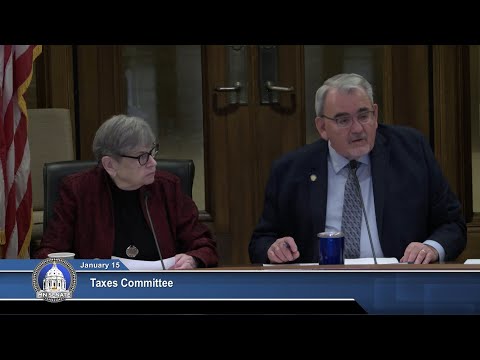
Department of Revenue officials briefed the Senate Taxes Committee on the federal Tax Cuts and Jobs Act (TCJA) provisions that expire at the end of 2025 and the potential effects on Minnesota's tax calculations.
Dan O'Rourke, individual income tax policy supervisor, and Jeremy Ness, Corporate Tax Division policy technical manager, explained that Minnesota uses a static‑date conformity approach tied to the Internal Revenue Code as amended through May 1, 2023, and that many federal rules feed into Minnesota starting points such as Federal adjusted gross income (FAGI) and federal taxable income (FTI).
Why it matters: when federal provisions that affect FAGI or FTI expire or change, Minnesota calculations that rely on those federal starting points can shift, potentially changing state tax liabilities and the state budget forecast unless the state Legislature acts to conform or decouple.
Key points from the presentation
- Conformity approach: Minnesota is a static‑date conformity state; current law ties Minnesota to the IRC as amended through May 1, 2023. Officials said that when Congress enacts or extends federal provisions, Minnesota must decide whether to conform, decouple, or make state‑specific adjustments.
- TCJA background: the TCJA enacted major individual and business tax changes in 2017, many of which are temporary and scheduled to expire Dec. 31, 2025. Because Minnesota often takes federal AGI or federal taxable income as starting points, several expirations will have downstream effects.
- Provisions with expected state impact: examples include the charitable contribution AGI limitation (TCJA raised it to 60%; expiration would revert the limit to 50%), the temporary increase in bonus depreciation (federal 100% bonus depreciation phases down in statute, producing timing effects), and the $10,000 state and local tax (SALT) cap. Department staff noted that Minnesota's pass‑through entity (PTE) tax was enacted as a workaround to the SALT cap and is directly tied to the federal limit; if the federal SALT cap expires, the PTE tax will also expire unless the Legislature acts.
- Business provisions: businesses saw major TCJA changes such as the single 21% corporate rate, repeal of the federal corporate AMT, global intangible low taxed income (GILTI) and other international changes. Minnesota conformed to some items and decoupled from others; those choices will determine whether future federal changes affect state tax bases.
Budget and forecast implications
Department staff said the state budget forecast assumes current law; if federal expirations occur as written, the forecast counts them as expired. If Congress extends or changes those provisions, Minnesota would need legislative action or rule changes to conform and the forecast would be adjusted accordingly.
Ending
Department officials said they will continue to provide guidance and outreach to taxpayers while the committee considers potential legislative responses to expiring TCJA provisions.