Get Full Government Meeting Transcripts, Videos, & Alerts Forever!
Get email alerts on the Tax Expenditure Review Commission topic
No spam. Unsubscribe anytime.
Legislative Budget Office summarizes Tax Expenditure Review Commission inaugural work and 2024 annual report
Summary
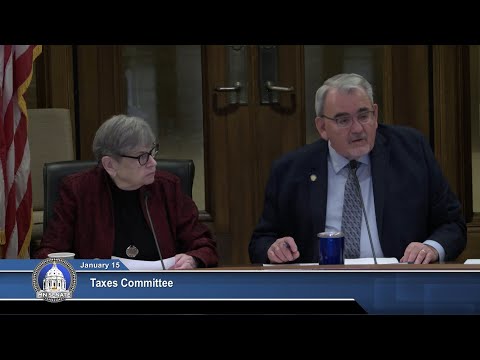
Legislative Budget Office staff briefed the Senate Taxes Committee on the Tax Expenditure Review Commission's 2024 annual report, noting that the commission completed initial objective statements for 45 expenditures and directed LBO to evaluate them, and explained statutory review components and timelines.
The Legislative Budget Office summarized the Tax Expenditure Review Commission's 2024 annual report and outlined the commission's statutory duties and initial workload for lawmakers on Wednesday.
Carlos Wodicka, lead budget analyst with the Legislative Budget Office, and Jordan Peoples, a GRAMA evaluator with the LBO, told the Minnesota Senate Taxes Committee that the commission conducted initial reviews and approved objectives and metrics for 45 tax expenditures during 2024.
Why it matters: statute requires the commission to review every tax expenditure at least once every 10 years and to report recommendations on whether an expenditure should be continued, repealed or modified. The commission's work turns the Department of Revenue's catalog into targeted evaluations that can yield concrete legislative recommendations.
What the LBO reported
- Statutory framework: the commission operates under Minnesota Statutes 3.8855 and uses the definition of tax expenditure found in Minnesota Statutes 270C.11, officials said. The commission has nine components it must include in each evaluation, ranging from annual revenue loss to incidence and recommendations.
- Initial phase completed: in 2024 the commission met six times, reviewed 45 tax expenditures and approved objective statements and metrics for each of those items; LBO staff were directed to evaluate all 45 expenditures.
- Workload and scale: the Department of Revenue's tax expenditure budget identifies about 327 tax expenditures with an estimated $48.8 billion in cumulative foregone revenue for fiscal year 2024; the commission's statutory duty to review each item within a 10‑year window creates a substantial ongoing workload for nonpartisan staff and commission members.
- What evaluations must include: Peoples summarized the nine statutory components: annual revenue loss, an objective statement, impacts and efficiency, comparisons with other state and federal incentives, potential modifications, the revenue‑neutral rate, incidence (distributional) analysis for significant expenditures, fiscal impacts on other state and federal taxes, and final recommendations.
Committee exchange
Committee members asked whether the LBO and Department of Revenue analyze local sales taxes and exemptions for churches and schools. Carlos Wodicka confirmed the LBO's analysis does not include local sales taxes imposed by referendum or local ordinances; later in the hearing Department of Revenue staff noted that constitutional exemptions for churches and schools are not changeable by the legislature and therefore are treated differently in the tax expenditure catalog but data can be provided on their magnitude.
Ending
LBO officials said future reports will shift from initial objective statements to completed evaluations with findings and potential recommendations; they invited the committee to consult the annual report for the full list of items the commission approved for initial review.