Get Full Government Meeting Transcripts, Videos, & Alerts Forever!
Get email alerts on the Tax Expenditure Budget topic
No spam. Unsubscribe anytime.
Department of Revenue presents updated tax expenditure budget, highlights new analyses and timing change
Summary
The Minnesota Department of Revenue presented the 2024 tax expenditure budget to the Senate Taxes Committee, summarizing more than 325 tax expenditures, new incidence analyses for major items, a revenue‑neutral metric, and timing changes intended to align the report with the biennial budget cycle.
The Minnesota Department of Revenue on Wednesday presented the tax expenditure budget that estimates the value of more than 325 statutory tax provisions for fiscal years 2024 through 2027.
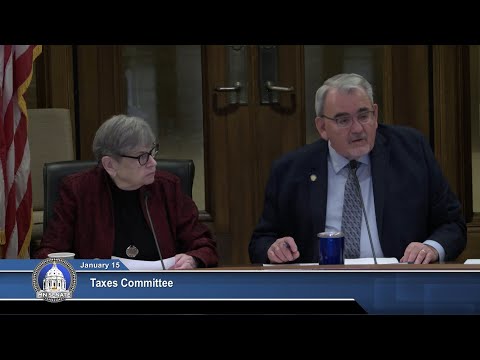
The report, delivered by Eric Ouellette, director of tax research at the Department of Revenue, projects the cost or revenue effect of more than 300 tax expenditures across 16 state and local tax types and includes new features directed by law change since the last report.
The tax expenditure budget catalogs statutory provisions that reduce revenue by granting selective tax relief, Ouellette told the Senate Taxes Committee. "Tax expenditures are statutory provisions which reduce the amount of revenue that otherwise would be generated by a tax, by granting special and selective tax relief to a subset of taxpayers," he said.
Why it matters: tax expenditures operate outside the biennial budget process and can grow without explicit annual review. The report is intended to give lawmakers a recurring, systematic reference for those ongoing tax measures.
Key details from the presentation
- Scope and scale: the report covers more than 325 statutory provisions across 16 tax types and estimates cumulative foregone revenue for the state for the covered period. Ouellette said the project took Department staff more than a year to compile because of the scheduling change required by law.
- Timing change: a law enacted in 2021 moved the report timing so it appears before a budget session; the Department said that gives legislators fresh tax‑expenditure numbers alongside budget work.
- New content: the report now includes (1) incidence analyses for 50 of the largest sales and income tax expenditures that break benefits down by income decile; (2) an explicit "revenue‑neutral rate" calculation showing how much rates could be reduced if a listed expenditure were repealed while holding dollars constant; and (3) an objective or purpose statement for about 60 expenditures where the Tax Expenditure Review Commission or statute has identified an objective.
- New chapter and universe: chapter 16 adds the cannabis gross receipts tax and four related expenditures; the Department cautioned estimates are preliminary because data are limited. The Department also added about 15 new expenditures and removed four that were repealed or are obsolete.
Committee exchange and context
Committee members asked about historical trends in additions and repeals and whether the Department or the Legislative Budget Office has compiled multiyear counts and dollar changes. "We could do that again by just comparing the old reports to the new ones," Ouellette said when asked whether predecessors had summarized historical additions and repeals.
Members also discussed how tax expenditures compare with direct spending. Ouellette said the Department considers administrability and reach when comparing tax‑code incentives to spending programs, noting that tax mechanisms can be efficient when the target population already interacts with the tax system, but that some goals are better served by direct spending or human‑services infrastructure.
Ouellette emphasized practical constraints: some tax expenditures exist for administrative simplicity (for example, the occasional sales exemption) and some are outside state authority (federally owned property is not included because the state cannot change that treatment).
Ending
Ouellette invited committee members to contact him for follow‑up questions and said the Department would reissue one corrected slide flagged during the presentation. The committee scheduled further hearings and the Tax Expenditure Review Commission was set to present separately on the statutory review process and the initial set of evaluations.