Get Full Government Meeting Transcripts, Videos, & Alerts Forever!
Get email alerts on the Water Fees topic
No spam. Unsubscribe anytime.
Council approves revised water meter/tap fees and a partial waiver for new residential construction
Summary
The council approved an updated water meter and tapping fee schedule and a related residential construction fee-waiver resolution that removes some inspection fees and reduces labor/equipment charges for meters and taps.
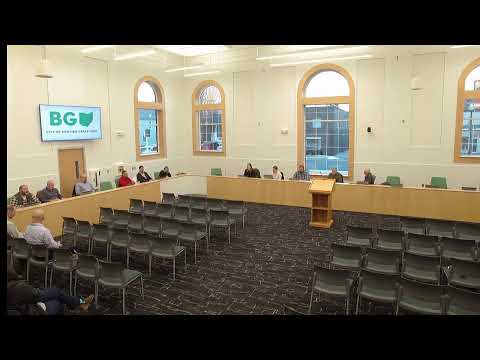
Bowling Green City Council on an administrative motion approved a revised water meter and tapping fee schedule and a related residential construction fee waiver after staff said the changes reflect current material prices and would align certain utility charges with other waived city fees.
Utilities Director Bridal said the city updated its meter/tap schedule to reflect current supplier prices and staff labor for installation. “The 5 eighths inch meter would go from a 1,090 down to $910,” Bridal said, and the 1-inch tap would be reduced from $1,520 to $800 if labor and equipment charges were removed.
The waiver resolution targets fees tied to new single-family construction. Bridal recommended waiving three smaller inspection or temporary service fees — temporary electric ($75), sanitary ($100) and storm lateral inspection ($35) — and removing the labor and equipment portion of the meter and tap fees for residential builds. “The recommendation I would provide to you, I guess or recommend to you is, we consider waiving the first 3 items,” Bridal said.
Bridal explained that meter materials remain a significant expense and the waiver would not cover the entire materials cost. “One reason for not waiving the entire cost of those materials is, it is more substantial amount of money compared to the other fees. You're over $900 for the materials to supply a water meter,” Bridal said.
Council members asked whether the waiver’s effective period should be tied to city council action on other departments’ waivers. The draft resolution states the utility waivers remain in effect “as long as all other city department fees associated with new residential construction are waived by the city council.” A council member asked whether that language could create ambiguity if other departments extend or narrow their waivers. Bridal replied the phrasing was intentionally open-ended to stay aligned with council action and said the language could be changed to a fixed date if council preferred. “If council decides later on that they want to extend it, we'd have to come back to you... This leaves it basically at the discretion of city council,” Bridal said.
Council voted unanimously to adopt the fee schedule (Resolution 012025-01) and to approve the new residential construction fee waiver (Resolution 01-2024-02); the record shows all five voting members present cast aye votes.
Votes at a glance
- Resolution 012025-01 — Approve updated water meter and tapping fee schedule. Roll call: Newlove — Yes; Jesse — Yes; Wagner — Yes; Hogan — Yes; Susiek — Yes. Outcome: approved.
- Resolution 01-2024-02 — New residential construction fee waiver (staff noted a typographical year error in the draft). Roll call: Susiek — Yes; Hogan — Yes; Wagner — Yes; Jesse — Yes; Newlove — Yes. Outcome: approved.
The resolutions change fees charged for new residential construction but do not waive meter-material costs entirely; staff said material costs remain the city’s direct expense and that the recommended change primarily removes labor and equipment charges for residential meter installs.
Next steps and context: staff said if council prefers a fixed expiration date the resolution language can be revised and brought back; otherwise the waivers will remain tied to whatever action council takes on other departments’ residential fee waivers.