Get Full Government Meeting Transcripts, Videos, & Alerts Forever!
Get email alerts on the Environmentally Critical Areas topic
No spam. Unsubscribe anytime.
Sammamish planning commissioners deliver ECA recommendations, outline process changes ahead of City Council handoff
Summary
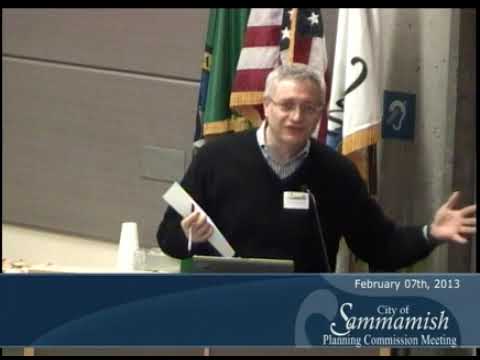
Acting Chair Mike Luxenberg said the Planning Commission completed its yearlong review of Environmentally Critical Areas (ECA) regulations and prepared a transmittal packet the commission will send to the City Council, with formal handoff scheduled for the next Tuesday meeting.
Acting Chair Mike Luxenberg said the Planning Commission completed its yearlong review of Environmentally Critical Areas (ECA) regulations and prepared a transmittal packet the commission will send to the City Council, with formal handoff scheduled for the next Tuesday meeting.
The commission agreed that Luxenberg, the acting chair, and Commissioner Kathy Richardson will represent the commission at City Council briefings on the ECA recommendations. Richardson said the packet includes a transmittal memo and, at the council meeting, the commission draft of the recommended code will be provided to councilmembers and the public. "We will be available," Richardson said, noting the chair and vice chair planned to attend council study sessions and prep meetings.
Why it matters: The ECA update was the commission’s largest project in the past year, producing a multi-document packet and extensive public input. Commissioners said the volume and complexity of the materials highlighted opportunities to change how the commission sequences technical presentations, public testimony and code drafting so future large code efforts run more efficiently.
Most important facts: The packet to the council includes the transmittal memo and supporting documents; the planning commission draft of the recommended code will be provided at the council meeting. Staff said the transmittal materials will be posted online and subscribers to the city’s govdelivery alerts will be notified. The commission also acknowledged and included multiple minority reports in the transmittal packet.
Process review and recommendations Commissioners and staff spent the bulk of the meeting in a facilitated retrospective on how the ECA process ran. Commissioners identified what worked well — including heavy public outreach, the use of evaluation forms to focus votes, posting written public comment in advance, and using track-changes Word drafts for the code — and proposed changes for future multi-month code projects.
Repeated suggestions included: - Phase technical presentations and consultant time so commissioners can deliberate on a single topic fully before moving to the next (for example, cover wetlands, complete deliberation, then move on to buffers). - Increase interactive access to technical experts throughout the process rather than front-loading consultant presentations. - Hold early work-sessions or off-site retreats to develop policy goals before drafting code and to build team cohesion; consider a targeted set of “deep-dive” meetings at key milestones. - Improve version control of code drafts and clarify when the commission will focus on policy versus when it will review proposed code language.
Commissioner Bubo Vol Islam said the off-site facilitation and the use of a success-criteria evaluation form were helpful and recommended doing those activities earlier in future processes. Commissioner Mike Collins and others praised staff outreach, the volume of written public input, and the expanded seven-minute public-comment allocation used for this process.
Staff and documents Cameron, a planning staff member who presented the work program, described upcoming priorities — including a transportation level-of-service review, a Title 24 (comprehensive plan/code process) update, and a 2015 comprehensive plan rewrite with a mid-2015 statutory deadline. Cameron said Public Works staff and the city’s consultant (David Evans and Associates) will lead the transportation work and that formal public-notice procedures will be followed when hearings are scheduled.
Evan, a staff member who prepared packet materials, told the commission staff had iterated the transmittal memo to reflect the commission’s decision process. Staff said hard copies of the transmittal and handoff documents had been provided to commissioners and the same documents will appear in the City Council packet and online.
Public comment Two residents spoke during public comment. Jim Osgood of 19661 Southeast 24th Way thanked commissioners and praised the seven-minute public-comment format as allowing fuller testimony. Architect and resident Bob Sorensen of 22609 Northeast Second Street said he appreciated the commission’s work but urged more outreach to frequent applicants, builders and design professionals so those user groups could offer targeted feedback.
Formal actions The commission took routine procedural actions at the start of the meeting: it approved the meeting agenda and approved the minutes from its Jan. 24 meeting. No policy votes on ECA code adoption occurred at this meeting; the packet is scheduled to be transmitted to the City Council for their review.
Looking ahead Commissioners asked staff to capture the retrospective notes and rank priorities so staff can prepare a refined process checklist for future, large-scale code efforts. Richardson and Luxenberg will attend council discussions on the ECA handoff and staff will post the full packet online; commissioners encouraged colleagues and the public to subscribe to the city’s notification service for updates.
Ending note Commissioners thanked outgoing chair Kathy Richardson for her leadership during the ECA process. "Thank you for your leadership and a job well done," Mike Luxenberg said. Richardson replied, "It's been a pleasure."