
Committee members push for stricter proof‑of‑funding and deed‑restriction requirements for larger projects
Get AI-powered insights, summaries, and transcripts
Subscribe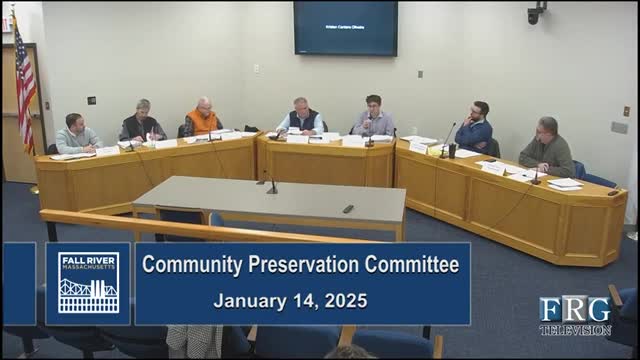
Summary
Committee members said applicants should supply bank commitment letters or other evidence of outside funding before grant awards; members also argued for deed restrictions to ensure projects funded with CPC money remain in the city.
A substantive policy discussion at Tuesday’s Community Preservation Committee meeting produced a clear, repeated request from several members: require applicants to provide supporting evidence of outside financing before awarding significant CPC grants.
Multiple committee members said past awards sometimes proceeded without bank commitment letters or construction‑loan documentation and that the committee should adopt a firmer standard going forward. Committee member BJ McDonald and others asked that large private projects provide bank letters, construction‑loan commitments, or other verifiable funding documentation before the committee finalizes awards. Kristen Cantera Olivera and others suggested updating the CPC application to require attachments such as commitment letters, loan documentation or bank statements where appropriate.
Members also discussed including deed restrictions as a standard condition of awards for projects with historic or location‑sensitive public value. Several speakers argued deed restrictions should keep funded assets in Fall River and prevent applicants from taking historic structures or historic fixtures off‑site after receiving public funds. The deed‑restriction filing fee of $625 was noted by staff.
Committee members discussed enforcement mechanisms: withholding payments until projects show “significant progress,” conditioning payments on inspections and CPC sign‑off, and including precise language in award agreements about when invoices will be paid. Administrative staff described the existing procedure: award agreements are drafted after city council appropriation, invoices are reviewed with CPC liaison sign‑off, and payments are processed as requisitions with municipal purchase orders; city projects follow municipal procurement rules and are treated as reimbursements.
No formal rule change was adopted at the meeting; members asked staff to follow up with model language and to consult corporation counsel and the Community Preservation Coalition about consistent practices other communities use.