Get Full Government Meeting Transcripts, Videos, & Alerts Forever!
Get email alerts on the Water Gsp topic
No spam. Unsubscribe anytime.
Ridgecrest council candidates split on details, largely agree GSP requires action
Summary
At a Ridgecrest City Council candidate forum, candidates agreed the Indian Wells Valley Groundwater Sustainability Plan requires action and stakeholder collaboration but differed on financing, public involvement, and the city’s role in GA decisions.
In a forum on municipal priorities, candidates for Ridgecrest City council said the Indian Wells Valley Groundwater Sustainability Plan, or GSP, requires immediate follow-up and broader public engagement.
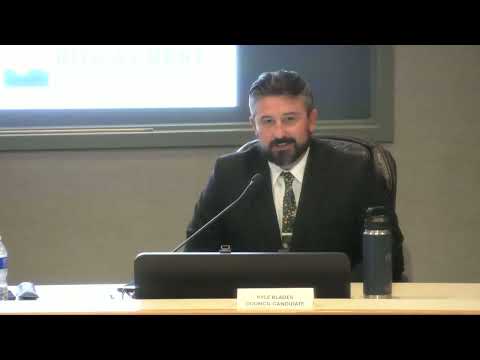
Candidates and incumbents framed water as the community’s most urgent long-term challenge. "The GSP is a living document," Councilman Kyle Blades said, urging residents to review meeting materials and follow updates. Councilman Solomon Rajaratnam said the GSP calls for an imported-water pipeline but acknowledged financing and other elements remain unresolved.
Why it matters: The basin is in overdraft and the GSP sets the regulatory framework and timelines for achieving sustainability. Candidates warned that implementation choices — including a costly pipeline or alternative projects — will carry long-term financial consequences for residents and businesses.
What the candidates said and asked
Blades emphasized that the GSP should be updated as new data arrive and that elected officials and residents need to follow public proceedings: "As data is collected, and every couple of years, it's supposed to be updated." He urged residents to "attend meetings, please watch the meetings, get a hold of theirs."
Tom Witnik said the city should make GA (the groundwater authority) business more accessible to residents, arguing that many GA meetings occur during daytime hours when working residents cannot attend. Witnik proposed a policy requiring the city’s GA representative to seek city council direction on major decisions: "If there's a major decision ... that needs to come back to the council so they can get input from you the people in the evening ... that can be done."
Rajaratnam described a multi‑track approach: pursue the state‑approved elements of the GSP while continuing to look for alternatives and small-scale sources such as conservation, stormwater capture, desalination and reclaimed water. He noted a statutory five‑year review cycle for the GSP and said some staff‑identified issues should be resolved before the next review, which he said is due by December 31, 2025.
Financing and public engagement
Candidates differed on readiness to commit to a pipeline as the primary solution. Blades said the pipeline "seems to be the most feasible" given current data but remained open to new alternatives. Rajaratnam and Witnik warned that pipeline costs are large and that the city and the GA need clearer financing plans; Rajaratnam said grant work was under way but not guaranteed.
All three candidates urged more transparent, earlier public engagement so voters can weigh tradeoffs before large commitments are made.
Ending
Candidates agreed on one point: the GSP will require continuing attention from elected officials and residents. They differed on the pace and mechanisms for city involvement, financing and whether the city should impose additional controls on its GA representative’s voting authority.