Get Full Government Meeting Transcripts, Videos, & Alerts Forever!
Get email alerts on the Public Safety And Health topic
No spam. Unsubscribe anytime.
Council delays vote on alternative‑response task force after hours of public testimony and debate
Summary
Hundreds of residents, service providers and council members debated a proposed task force to plan an alternative mental‑health response model; the council voted to postpone the resolution to allow more time for revisions and outreach.
The Knoxville City Council on a voice vote postponed consideration of a resolution to create and fund an "alternative response" task force that would plan a pilot program to dispatch non‑police teams for certain mental‑health, substance‑use and homelessness calls.
The resolution, introduced as Item 11c, drew three dozen public speakers and extended council debate. Supporters — including clinicians, formerly employed crisis workers and community organizers — urged the council to create a task force that would design a pilot to redirect nonviolent behavioral‑health calls away from law enforcement.
Amelia James, a licensed clinical social worker and member of Knoxville Heart, told council that the group had been pursuing alternative response for three years and urged passage of the task force: "This task force would not exist to check some sort of symbolic box," James said, adding that a formal, stakeholder‑led process could produce a tangible proposal.
Alex Riffwald of Knoxville Heart said the group has drafted proposals and asked that community organizers be included in planning: "There's no alternative response without Knoxville Heart," he said, noting local organizing and outreach work connected to the idea.
Speakers with clinical experience cited evidence from programs elsewhere, arguing alternative response can reduce emergency‑room visits and save money. Dr. Ebony Winford, a licensed psychologist and director of research and health equity at a federally qualified health center, said alternative response can reduce need for higher‑level medical care and offered national cost‑savings estimates cited by program evaluations.
Council members debated the resolution’s scope and funding. Questions included whether the city should act alone or seek multi‑jurisdictional partners (county, state, hospitals), which agency would host a pilot, whether existing providers such as Helen Ross McNabb would participate, and how many staff and vehicles a pilot would require. Speakers and members cited two different budget figures during the meeting: the version on the council agenda asked for a smaller initial allocation (the packet figure of $50,000 was discussed), while Knoxville Heart described a separate pilot proposal costing about $350,000–$400,000 for one van and three staff for a 12‑month pilot.
Vice Mayor Roberto and other members emphasized the need for cross‑jurisdictional funding and clearer staffing plans. Administration staff said the city has previously studied alternative‑response models and participated in workshops; Deputy Mayor Aaron Gill said the city had reviewed case studies and sequential‑intercept mapping with partner agencies in 2021 but that the model would require additional funding and coordination.
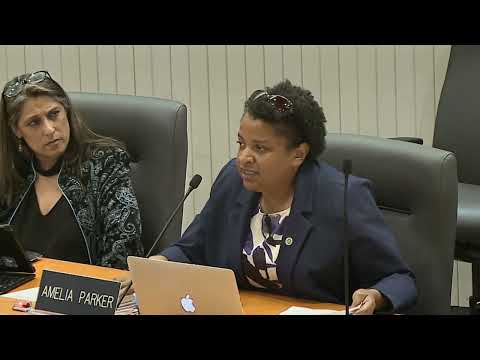
After debate, Councilwoman Parker moved to postpone the resolution to the council’s June 27 meeting to permit council members and community groups to negotiate amendments; the motion to postpone carried.
Ending: Supporters said they will continue organizing and meeting with council members and administration; council members asked for revised language on membership, budget and intergovernmental commitments before the item returns.