Get Full Government Meeting Transcripts, Videos, & Alerts Forever!
Get email alerts on the Committee Rules topic
No spam. Unsubscribe anytime.
Joint Budget Committee narrows verbal amendments, adopts rules change and advances general appropriation measure
Summary
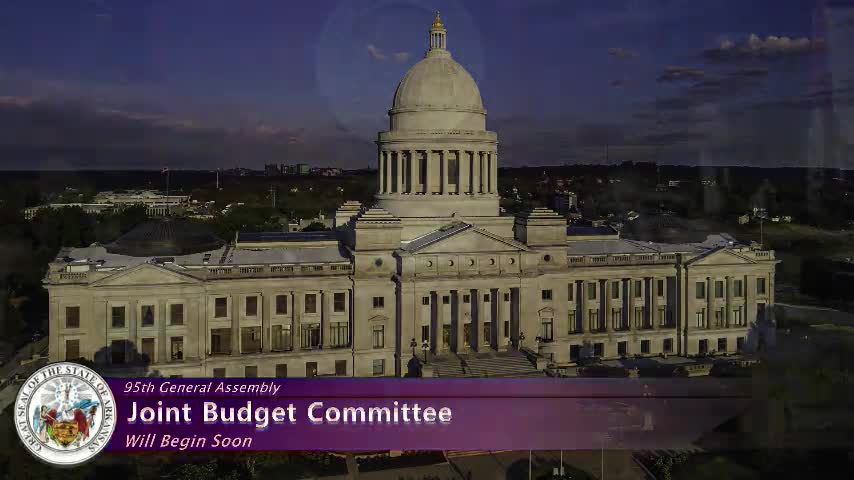
Mister Chairman opened the Joint Budget Committee meeting and introduced a single substantive rules change requiring that "all amendments to bills presented to joint budget committee shall be in writing," while allowing chairs to accept minor or technical verbal amendments in subcommittees.
Mister Chairman opened the Joint Budget Committee meeting and introduced a single substantive rules change: "All amendments to bills presented to joint budget committee shall be in writing," with a proviso allowing a verbal amendment to be presented in a subcommittee "if it is deemed by the chairs as minor or technical," and requiring that any verbal amendment adopted in subcommittee be reported in writing to the full committee.
The change — described by meeting staff as intended to align the committee—s rules with House rules — sparked extended discussion among senators about whether the language would prevent subcommittees from making nontechnical amendments. Senator Hickey sought explicit assurance that subcommittees could still propose and adopt substantive amendments if the subcommittee members voted for them; Hickey said he wanted to "make 100% sure that a subcommittee can make any amendment if they get the votes that they want to. Not just something that's technical in nature." Senator Peyton asked whether, when a subcommittee approves an amendment verbally and reports it in writing, the full committee could choose to consider the bill as amended or as introduced; the chair confirmed the full committee could vote down the amendment and consider the bill unamended.
Legal counsel (identified in the transcript as "Geo") told members that the determination whether an amendment is "minor and technical" normally falls to the chair. Staff explained the change was drafted to match House rules, which prohibit verbal amendments, and to avoid creating a procedure inconsistent with those rules. Members also pointed to an existing provision (page 10, Section 15 in the draft rules) that gives the joint committee authority over subcommittee rules where conflicts exist, a provision staff said supports the committee—s ability to require written presentation of nontechnical changes.
After brief procedural clarification by staff and the chairs, the committee voted to adopt the rules as amended (the motion as read at the meeting was: "approval of adoption of the rules as amended to add on page 4 'or subcommittees' after 'joint budget committee' on D1"). The meeting record shows the motion carried; no roll-call tally was provided in the transcript.
Following the rules vote, the committee considered a general appropriation bill described in the meeting as "a house bill of a thousand and 2." The chair said the measure is "the bill that we have to pass in our constitution before we do anything else." The committee moved to adopt the measure; the transcript records the committee vote result as "do passed." No sponsor name, motion maker, or roll-call tally is recorded in the transcript provided.
Votes at a glance
- Adoption of committee rules as amended (add "or subcommittees" to D1; require amendments to be in writing; allow chairs to accept verbal amendments in subcommittees if minor/technical). Outcome: approved (vote carried; tally not specified).
- General appropriation bill described in the meeting as "house bill of a thousand and 2." Outcome: do passed (tally not specified).
Why it matters: The rules change formalizes a requirement that substantive amendments be presented in writing to the Joint Budget Committee while preserving the ability for subcommittees, at the chairs— discretion, to accept minor or technical verbal changes and then report them in writing. The committee—s approval of the general appropriation measure advances a constitutionally required funding bill.
What—s next: Staff and chairs will implement the amended language in the committee—s rules text; the committee chair indicated no further meetings are scheduled this week and adjourned the session.