Get Full Government Meeting Transcripts, Videos, & Alerts Forever!
Get email alerts on the Land Development Code topic
No spam. Unsubscribe anytime.
Deltona staff proposes consolidation of administrative procedures and new use chart for land-development code
Summary
Consultants and staff presented proposed amendments to Chapter 70 and Chapter 74 consolidating administrative procedures, and a revised Chapter 110 use chart to standardize permitted uses and conditional uses across zoning districts; no final ordinances were adopted at the workshop.
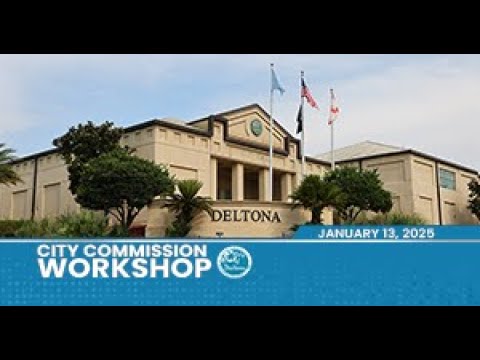
At a Jan. 13 workshop staff and consultants presented proposed updates to Deltona's land development code intended to consolidate administrative procedures, clarify review authorities and introduce a new use chart for Chapter 110.
Alexis Crespo, vice president of planning with RVI Planning and Land Architecture, said the proposed Chapter 74 amendments would consolidate procedural references now scattered through Chapters 70, 74, 75 and 110 and make permit paths and noticing more user-friendly. "The idea is a one-stop approach to reduce applicant confusion and staff time," Crespo said. The draft would also break conditional uses into "minor" and "major" categories so lower-impact applications could be decided administratively or at Planning & Zoning instead of automatically advancing to the City Commission.
Jessica Entwistle, assistant director, presented the proposed Chapter 110 use chart and explained staff recommendations to streamline some specific retail categories into broad "retail and services" uses, add government-type and entertainment-type uses, and expand permitted uses in several commercial and industrial districts while reserving conditional-use treatment for certain activities such as tattoo shops or pet boarding in C-1.
Commissioners raised questions about specific changes. Vice Mayor Harriot asked whether storage facilities would be allowed in C-1; staff replied storage facilities would not be permitted in C-1 but could be permitted in industrial districts or through MPUD/BPUD mechanisms. Several commissioners discussed farm and agricultural uses in low-density residential zoning: staff proposed allowing agricultural uses on RE1 or RE5 parcels only if the parcel met a specified acreage; Vice Mayor Harriot and others asked that the commission consider allowing agricultural uses on standard RE1 lots (minimum 1 acre) rather than imposing a higher 3.5-acre threshold.
On minor/major conditional uses, staff said the draft would include footnotes and intensity limits (for example, limiting daycare sizes for "minor" classification) and that applicants could appeal administrative decisions. Commissioners requested more time to review the proposed use chart and several asked for an additional workshop focused solely on the major/minor classifications before a final ordinance packet is drafted.
Staff said the administrative changes also include clarifications tied to the Right to Farm Act and a note that permit fees may be amended by the commission. Because the item is a workshop presentation, no formal commission action was taken; staff will return with redlined ordinance language for public hearings before Planning & Zoning and the City Commission.