Get Full Government Meeting Transcripts, Videos, & Alerts Forever!
Get email alerts on the Mental Health Diversion topic
No spam. Unsubscribe anytime.
Casper municipal judges describe diversion program that cuts fines for treatment; council agrees to bring formal MOU for approval
Summary
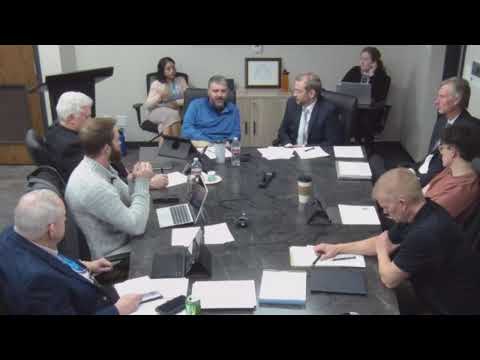
Judges, city prosecutors and Central Wyoming Counseling Center staff described an adult mental‑health diversion program that offers credit on fines for treatment participation. Council asked staff to bring a formal memorandum of understanding (MOU) for approval and discussed a possible public signing with the Wyoming Supreme Court.
Casper Municipal Court judges and city and treatment partners briefed the City Council on a locally implemented mental‑health diversion program that lets eligible defendants receive credit on fines for documented participation in treatment.
Judge (name not specified), joined by Judge Gillespie and court staff, described the program as voluntary and focused on low‑level, nonviolent offenses related to substance use and mental health. The judges said the court can sentence defendants and then give credit for treatment—"we're giving them credit on a monthly basis if they submit proof to the court that they are actively engaged in some kind of treatment or counseling," one judge said.
The council heard statistical reporting attributed to Jackie Brown in the city attorney's office: between Oct. 6 and Jan. 13 there were 142 cases that met program eligibility; 93 defendants accepted diversion; 20 of those 93 were repeat offenders with multiple cases; 19 people sought counseling and one enrolled in intensive inpatient treatment; 29 sought help via other programs and 14 used AA/NA meetings (credit given for four meetings per month). The judges and prosecutors said many defendants carry thousands of dollars in fines and that treatment incentives are intended to reduce recidivism and the fiscal cost of repeated incarcerations.
Erica Sanchez and Sarah Saltzman of Central Wyoming Counseling Center (CWCC) explained CWCC's role: screening, detox capacity, arranging residential and outpatient placements, case management and post‑discharge outpatient follow up. CWCC officials said their current state block grant and a committed CWCC staffing position are being used to support the diversion placements; they said CWCC believes the block grant is adequate for current demand but that continued data collection is needed to assess future funding requirements.
City Attorney staff and judges said the program began informally last fall and has been adjusted (from a deferred‑prosecution model to a sentence‑then‑credit model) because the latter produced higher participation. Eric (city attorney) told the council that state Supreme Court rules require a formal MOU to document roles and that staff will bring a draft MOU forward for council approval at next week's formal meeting. Councilmembers agreed to proceed; they also discussed a proposed public signing ceremony with the Wyoming Supreme Court to raise awareness and suggested holding any signing at CWCC rather than City Hall.
No formal council vote was recorded at the work session; the council instructed staff to bring the MOU forward for formal approval at the next meeting and expressed support for a public signing event if scheduling permits.