Get Full Government Meeting Transcripts, Videos, & Alerts Forever!
Get email alerts on the Open Government topic
No spam. Unsubscribe anytime.
Resident raises Sunshine Act concern after council members sign checks post-meeting; councilors defend practice
Summary
A resident at the Jan. 14 Columbia Borough Council meeting said post-meeting signature of borough checks created an appearance of a closed meeting and violated the Sunshine Act; councilors and staff responded that signing checks after a meeting, without deliberation on borough business, is not a violation.
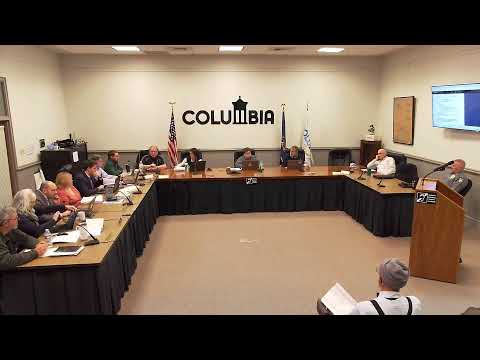
A Columbia resident raised concerns at the Jan. 14 borough council meeting about council members remaining after adjournment to sign borough checks, saying the practice constituted a violation of the Sunshine Act.
The resident, identified in the meeting only as Frank, said he had returned to borough hall after a Dec. 10 meeting and found the door locked while council members were signing checks, and he argued the group signing checks amounted to conducting borough business outside an open meeting. “What my concern is after the meeting, the authorized council meeting, council stays and they sign the checks. That's a no no. That's a violation of the Sunshine Act,” Frank said during public comment.
Council members and staff rejected that characterization. Council and staff clarified that all councilors are authorized signatories for borough checks but that only two signatures are required per check. Borough staff and council said checks signed after meetings are items that were approved in the public meeting as part of the finance report, and that the post-meeting signatures are administrative execution of already-approved items, not deliberations on borough business. A staff member said: “All you're doing is signing those checks that have been authorized at the meeting. So there's no discussion of those checks.”
Councilors acknowledged the appearance issue raised by the resident and discussed practical fixes: limiting the number of signers who remain after a meeting, adjusting when doors are locked, or setting a short, publicized signing period after meetings so the public understands procedures. Councilperson Casey suggested staff consider changing guidance so doors remain open until checks are signed; other council members suggested rotating two signers or a designated schedule so the public perception of an after-hours meeting is reduced.
Why it matters: Pennsylvania’s open‑meetings norms (commonly referred to in the discussion as the Sunshine Act) require that agency business conducted by a quorum be in a public forum; residents’ concern centered on whether a quorum signing checks after adjournment creates the appearance of an undisclosed meeting. Council and staff said no deliberation occurred during signing and that Right-to-Know and open-meeting obligations remain in effect when a quorum discusses agency business.
Next steps: Council asked staff to examine operational changes — scheduling signers or delaying door locking — to reduce the appearance problem; no formal policy change was made at this meeting.