Get Full Government Meeting Transcripts, Videos, & Alerts Forever!
Get email alerts on the Recovery Resources topic
No spam. Unsubscribe anytime.
FEMA opens transitional sheltering; EPA to remove hazardous household waste as recovery centers open
Summary
FEMA, EPA and county officials outlined sheltering, hazardous-waste removal and recovery-center services available to people displaced by the Eaton and Palisades fires.
Federal, state and local officials described immediate recovery steps, including FEMA transitional sheltering, disaster-recovery centers and a federal household-hazardous-waste removal effort.
FEMA Region 9 Administrator Robert Fenton Jr. said 53,000 people had registered for individual-assistance programs and nearly $12 million had been provided through FEMA registrations. He announced that FEMA activated its Transitional Shelter Assistance (TSA) program to place eligible survivors in participating hotels while they arrange short- or longer-term housing.
“TSA may also be available for those that have insurance,” Fenton said, describing that FEMA would pay the cost of rooms, taxes and nonrefundable pet fees directly to hotels and would notify eligible registrants by phone, text or email. He said survivors in the program would be contacted every 14 days to assess ongoing needs.
Fenton also said the federal government had directed the Environmental Protection Agency to remove household hazardous waste from impacted properties and allocated $100 million to start the effort. He said the EPA would stand up about 40 teams, representing roughly 500 personnel, to remove everyday hazardous items including paints, cleaners, solvents, oils, batteries, pesticides and larger debris such as asbestos-containing materials and pressurized cylinders.
“The first step…is reducing the immediate threat of hazards,” Fenton said, adding that EPA teams would coordinate with state and local public-works and incident-command partners to enable later debris clearing and rebuilding.
Los Angeles County Public Health Chief Medical Advisor Dr. Nicole Quick urged caution about air quality and recommended N95 or P100 respirators for those near ash and debris, noting cloth masks and bandanas are not adequate protection. Quick said N95 masks are available free at LA County libraries and local assistance disaster recovery centers and that medication-assistance teams are working at centers to help people secure prescriptions, including treatments for opioid-use disorder (call 213-288-9090 for assistance from 8 a.m. to midnight).
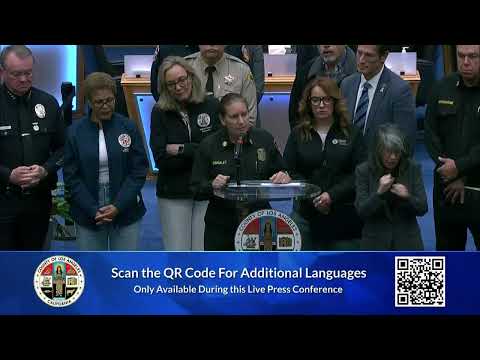
Supervisor Lindsey Horvath and Mayor Karen Bass described disaster-recovery centers that have opened in Pasadena and West Los Angeles and listed county services available at the centers, including FEMA registration help, replacement vital records and coordination with state and federal agencies. Horvath said county 211 wait times were under five minutes and recovery.lacounty.gov lists available services.
Officials said residents should register with FEMA if insured to coordinate benefits with insurers and that many nonprofit, state and federal agencies are co-located at recovery centers to assist survivors.