Get Full Government Meeting Transcripts, Videos, & Alerts Forever!
Get email alerts on the Board Elections topic
No spam. Unsubscribe anytime.
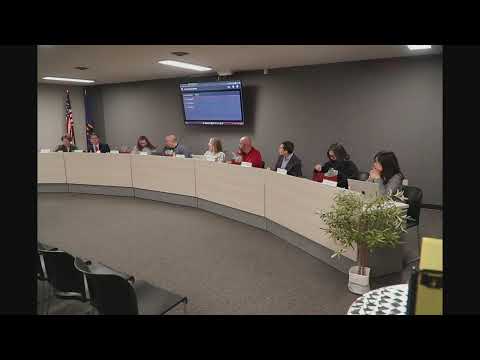
West Lafayette board elects Amy Austin president after debate over president’s authority; vice, secretary chosen
Summary
The West Lafayette Community School Corporation Board of Trustees on Jan. 13 elected incumbent Amy Austin president by a 4-3 vote after debate over the president’s authority and duties.
The West Lafayette Community School Corporation Board of Trustees on Jan. 13 elected incumbent board member Amy Austin president by a 4-3 vote after a contentious discussion about the limited formal authority of the board president and how the president should interact with the superintendent.
The matter drew sustained attention because several trustees said past practice had allowed a board president to intercede with the superintendent in a way they argued exceeded the office's legal authority. "No individual board member has the authority to direct the superintendent," said Stacia Mumford, a trustee who nominated Lawrence Wong for president. Mumford told colleagues that state law and board policy limit the president’s formal powers to actions such as calling special meetings and, after board approval, signing contracts on the corporation’s behalf. "They do not have the authority to direct the superintendent," she said.
Why it matters: trustees said the exchange reflected a broader concern about information access, transparency and whether any single officer should be a gatekeeper for board materials. Those concerns shaped nominations and final votes for president and other officer positions at the organizational meeting.
Wong defended a rules-focused approach when nominated. "If I'm elected, I think one thing I'm gonna do is I will try to build a more unified school board," Wong said, adding he would emphasize following Robert's Rules and board policy to make meetings and policymaking more efficient.
The vote and officer outcomes - President: Amy Austin elected 4–3. (Nominee Lawrence Wong received three votes.) - Vice president: Lawrence Wong, elected unanimously (7–0) after a separate nomination and roll-call vote. - Secretary: George Lyle was selected in the roll-call votes that followed nominations.
Votes at a glance (procedural appointments and routine items decided at the organizational meeting) - Michelle Cronk appointed corporation treasurer (motion seconded; vote recorded as in favor by board; tally announced by chair as unanimous in that vote segment). - Bonding of specified positions (treasurer $100,000; ECA/athletic/other treasurers $25,000 each) — motion moved and seconded and approved by the board during the organizational meeting. - School corporation physicians (Dr. Chester Ho and Dr. Anne Marie Biancole) reappointed; trustees voted unanimously in favor during the meeting. - School attorneys reappointed; trustees voted 7–0 in favor after discussion of retaining counsel while any replacement would be hired to avoid a lapse in representation. - Board compensation (Indiana statutory maximums: $2,000 per year plus per-meeting allowances) approved 7–0; board discussed that the amounts are statutory maximums and that members may donate compensation to the West Lafayette Schools Education Foundation.
What trustees said and next steps Trustees who supported Austin cited experience managing meetings and a desire for continuity; those supporting Wong argued for rotating leadership and tighter adherence to formal rules to reduce interpersonal conflict. Austin addressed the board after the vote and said she had worked to improve transparency and intended to lead with an eye toward public meetings and the superintendent’s role.
The board scheduled follow-up items for the regular meeting that followed the organizational session, including board training and a communications agreement intended to address many of the concerns raised during nominations.
Ending: The organizational agenda concluded with the seating of officers and routine appointments; board members signaled interest in more training on roles and rules during the coming year.