Get Full Government Meeting Transcripts, Videos, & Alerts Forever!
Get email alerts on the Seal Of Biliteracy topic
No spam. Unsubscribe anytime.
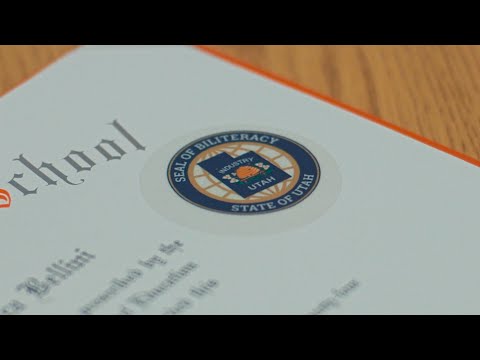
Alpine students increasingly earn Seal of Biliteracy as district expands K–12 language pathways
Summary
Alpine School District staff say more students have earned the Seal of Biliteracy in recent years after expanded testing access and K–12 language pathways. District specialist Jody Lindsay and classroom teachers described gains in student proficiency and broader benefits for graduates.
Alpine School District officials and teachers described rising numbers of students earning the Seal of Biliteracy and said expanded testing access and sustained K–12 language instruction have driven the increase.
Jody Lindsay, world language specialist for Alpine School District, said the Seal of Biliteracy is recognized across the United States and that Utah requires students to demonstrate an “intermediate mid” proficiency in English and in one or more world languages to qualify. Lindsay said the district first saw a notable rise in seals when testing became available to more students in 2021: “We had about 200 students that were non DLI who ended up earning the seal, and every year it has increased. Last May, we awarded 658 seals of biliteracy to our seniors,” she said.
The Seal of Biliteracy is an academic award districts use to recognize students who demonstrate proficiency in English and another language. District staff said meeting the intermediate mid threshold in both languages is the state requirement; in Alpine that goal is being supported through expanded course sequences from junior high into high school and, in some languages, from elementary programs through graduation.
Katherine Tyler, a French teacher at Pleasant Grove High School, described how students progress through her program. “Google Translate gives you just the words, but learning a language is much more than learning grammar and learning vocabulary. It's learning to communicate and learning different cultures, different perspective, different practices,” she said. Tyler said students typically attempt the Seal in courses such as French 3, 4 or 5 and, by higher levels, demonstrate critical thinking and comprehension of texts.
Students described both cultural and practical benefits. Ryan Marsh, a senior at Pleasant Grove, said after five years of French study he has gained perspective and workplace advantages: “It is a lot of hard work, but that just makes the reward so much better…you go from knowing simple words to being able to have, like, a conversation with your peers. And it's so fun. When you go to France, you'll be able to speak the language, but also just like in your jobs, you can have like raises and stuff just for knowing a second language,” Marsh said.
District staff and teachers highlighted that some language programs begin in elementary school for certain languages and continue through junior high into high school, allowing students more time to reach the proficiency level the state requires for the Seal. They credited wider testing access and coordinated K–12 instruction for the growth in awardees.
No formal board actions or votes were recorded in this segment. The discussion focused on program outcomes, student experiences and instructional progression rather than policy changes or funding decisions. The district did not specify budget figures or the full list of languages offered in every school during the conversation.
Alpine School District officials and teachers said they will continue offering sequential world language courses and encouraging eligible students to pursue the Seal of Biliteracy as a credential for postsecondary and workplace opportunities.