Get Full Government Meeting Transcripts, Videos, & Alerts Forever!
Get email alerts on the Water Quality Reporting topic
No spam. Unsubscribe anytime.
County inspector general: Riviera Beach staff failed to report water contamination on at least 130 occasions
Summary
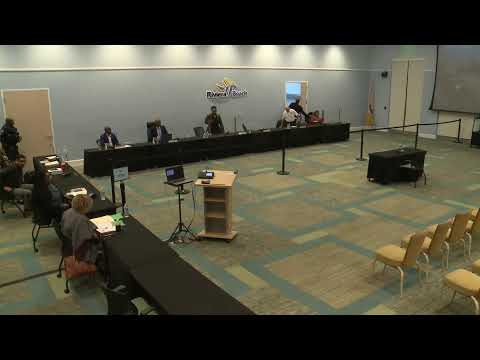
John Kerry, Palm Beach County inspector general, told the Riviera Beach Utility Special District board that an OIG investigation found city utility staff failed to report bacterial contamination to the Florida Department of Health on at least 130 occasions and altered two test results so wells appeared clean.
John Kerry, Palm Beach County inspector general, told the City of Riviera Beach Utility Special District board that his office’s investigation found utility staff failed to report water-test results to the Florida Department of Health as required and altered at least two results so contaminated wells appeared clean.
Stuart Robinson, director of investigations for the inspector general’s office, told the board the inquiry reviewed thousands of documents, hundreds of hours of interviews and test results from the city and the district’s contracted laboratory, CAPSAR Laboratory. Robinson said the office compared lab results with the test results sent to the Department of Health and found “on over a 130 occasions” the city did not submit results indicating total coliform contamination and on two occasions results were altered. He said two instances involved E. coli that were not reported within the rules’ required timeframes.
The report, presented as Palm Beach County Office of Inspector General Report 2024-0006 (November 2024), focused on whether individuals responsible for reporting followed Department of Health rules. Kerry said the OIG’s role was to investigate the actions of individuals and to make recommendations; it did not itself test water quality or otherwise perform the Department of Health’s regulatory role. “We were not investigating water quality,” Kerry said. The office coordinated with the Florida Department of Health during the inquiry and referred its findings to that agency and to law-enforcement partners.
Robinson described two types of problems the OIG found: failures to submit required reports of total coliform contamination (which the OIG said occurred on roughly 130 occasions) and two occasions when a positive E. coli result was not reported in a timely manner, including one June 27, 2023 test for a well that Robinson said went unreported for weeks. He also described instances where city-submitted monthly reports did not match the lab’s original results.
The report identifies people by duties and by interviews. According to the OIG account, lab technicians said they were told by then-compliance director Dr. Anthony Williams to perform less testing than required and that Williams did not forward positive tests to the Department of Health. Robinson quoted Williams as saying he had been influenced by “unspoken pressure” from others to avoid reporting positives because taking wells out of service would be costly. Robinson said the OIG found that Executive Director Michael Lowe reported not knowing that required testing and reporting were not being performed.
Kerry told the board the OIG recommended adoption of stronger internal controls, written procedures and two-person verification for reporting, regular training for staff tasked with sampling and reporting, a formal process to resolve reporting disputes, and appropriate personnel actions when warranted. Kerry said the city had accepted the recommendations and that the OIG will follow up on implementation.
City Manager Jonathan Evans and other city officials responded during the meeting by saying staff already has taken steps since the events cited in the report: additional sampling training, consideration of body-worn cameras for samplers, and other procedural changes. Evans also said the city and the district would provide the board more specific documentation of the operational changes and training in coming weeks.
Board members asked whether the inspector general’s office had authority to investigate the dependent utility district; the OIG and its counsel said their jurisdiction covers dependent special districts and that the report followed evidence the office obtained. Kerry and his staff said all interviews in the investigation were conducted under oath and that the OIG provided subjects an opportunity to respond; they confirmed referrals of the report and supporting materials to the Florida Department of Health and to state and local law enforcement and the state attorney for possible action.
Public commenters expressed concern about trust in the water system and urged accountability. The OIG presentation and follow-up questions dominated the meeting and prompted board members to ask for more detailed, documented follow-up from city administration about the procedural reforms cited by Evans.
The OIG presentation, board discussion and public comments ended without a formal board action on the report itself. The district board received the presentation, asked questions and directed staff to provide additional documentation of remedial steps and training.