Get Full Government Meeting Transcripts, Videos, & Alerts Forever!
Get email alerts on the Lcip Review topic
No spam. Unsubscribe anytime.
Lewiston Planning Board begins multi-meeting review of Capital Improvement Plan; staff asks members to send written questions
Summary
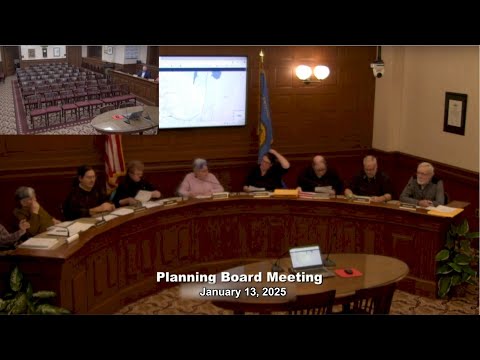
The Lewiston Planning Board began a scheduled, multi‑meeting review of the city’s Capital Improvement Plan on Jan. 13 and asked members to send specific, project‑referenced questions in writing so department heads can prepare answers and visuals for a Jan. 27 Q&A session.
The Lewiston Planning Board began a multi-meeting review of the city’s Capital Improvement Plan (LCIP) at its Jan. 13 meeting, focusing on how projects align with planning goals and the board’s advice to City Council. Planning staff emphasized this will be a multi-step process: members should send specific questions to staff ahead of the next meeting so department heads can prepare answers and visuals.
Why it matters: The LCIP guides near-term capital spending, debt and bonding decisions that shape infrastructure, public facilities and city services. The board’s recommendation to the City Council is a required step before Council acceptance of the plan.
Schedule and process details discussed
- Staff requested that Planning Board members submit specific questions for department heads by the end of the day Wednesday (staff asked for submissions to arrive in the staff inbox by the start of business the following day). The Planning Board will hold a dedicated meeting on Jan. 27 to hear department responses and will use its Feb. 10/11 meeting to finalize a recommendation to Council (staff noted the formal recommendation is due on the 11th). Staff said they would distribute collected questions to departments and share answers with the board prior to the Jan. 27 meeting.
- Staff advised members to identify questions tied to specific LCIP line items (page numbers or project IDs) to make review efficient and avoid discussing items by email with more than two members (which could constitute a meeting under open‑meeting rules).
Substantive topics and examples members asked departments to address
Board members asked for additional information, visuals or clarifying documentation on many LCIP items, including: - Public works projects: renderings and design documents for East Ave and Central Ave rehabilitation; the Lincoln Street parking garage deck repairs and whether cracks indicate structural problems; alignment of storm drain repairs and street maintenance projects; documentation for Jordan Road bridge design/permits. - Facility projects: schedules and last‑done dates for armory gym floor work and municipal garage investments; downtown municipal parking signage and its maintenance strategy. - Operational/fleet questions: whether electrification or low‑emission equipment options were studied for vehicle and equipment replacement programs and whether state or federal grant opportunities were pursued for low-/no‑emission vehicles or charging infrastructure. - Water/wastewater/stormwater: status of enterprise funds that support sewer, water and storm projects and whether separate enterprise borrowing affects the city bonding limit; SCADA cyber‑security and fiber interconnection details; pipe replacement materials and expected lifetimes for distribution main replacements. - Schools and recreation: renderings or design work for school space planning and tennis court reconstruction; whether school projects have been assessed in a 10‑year facilities plan and whether solar or energy‑efficiency grant options were explored for roof and HVAC work.
Large-ticket highlights flagged by the board
- Riverfront Island implementation (economic development): board members asked staff to map LCIP spending items to the Riverfront Island master plan implementation matrix so the large investment can be tracked against the plan’s actions. - Public Works facility and enterprise projects: board members discussed the city’s bonding capacity (cited an 80% guideline that staff described historically) and asked for a summary comparison: prior five fiscal cycles’ closeness to the 80% limit, the bondable amount for FY26 and the gap between requests and that limit.
Next steps
- Members were asked to send specific, item‑referenced questions to staff by the next morning deadline so departments can prepare targeted answers and visuals for the Jan. 27 meeting. - Acting City Administrator and the Public Works Director were expected to attend the Jan. 27 meeting to answer department‑level questions that the board compiles. - The board will use a subsequent meeting (listed in the packet schedule) to finalize its recommendation to the City Council; that recommendation is due on the 11th as noted in the meeting.
Speakers (selection): Shelley Norton, Jonathan Connor, Acting City Administrator (to attend Jan. 27), Public Works Director (to attend Jan. 27), multiple Planning Board members including Alex Pine, Michael Marcotte and others.
Ending: The board scheduled a focused Jan. 27 session for LCIP Q&A and told members to submit narrowly scoped, line‑referenced questions in writing so departments can provide the requested detail and visuals.