Get Full Government Meeting Transcripts, Videos, & Alerts Forever!
Get email alerts on the Restitution topic
No spam. Unsubscribe anytime.
Judge orders $500 restitution after victim's $5,500 repair invoice at Clayton County arraignment
Summary
In a restitution hearing tied to a December 2024 closed trespass case, the court awarded the victim $500 after hearing testimony and reviewing an invoice claiming $5,500 in repairs. The judge said the state failed to link most repair charges directly to the defendant's conduct.
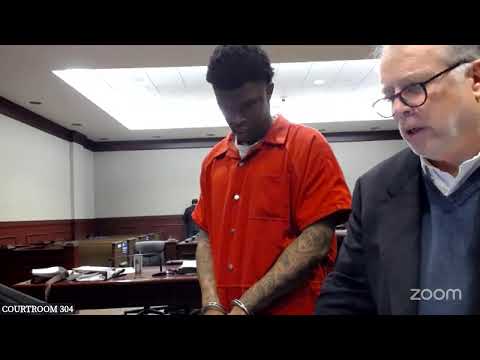
Clayton County State Court Judge Tammy Long Hayward ordered $500 in restitution on Jan. 14, 2025, in State of Georgia v. Deandre Lemique Benton (2024CR09377), a restitution hearing arising from a criminal trespass that the court closed on Dec. 3, 2024.
The homeowner and victim, Joseph Marcos, testified that he had a contractor invoice and paid receipt dated Oct. 31, 2024, for $5,500 for window replacement, floor sanding, bathroom repairs and interior painting after someone climbed through a rear bathroom window and caused other interior damage. Marcos identified the contractor on the receipt as Brightstone Home and said he paid the invoice out of pocket; he also said his property is owned by an LLC he controls and that he had not filed an insurance claim because his deductible was typically $5,000.
Prosecutor (court staff) offered the invoice and asked the court to award $5,500 in restitution. Defense counsel, Taz Taylor, objected, arguing the state had not established that the paid contractor statement was linked to the precise event to which Benton had entered a plea, and that Marcos himself had not personally inspected all the damage before authorizing repairs. The defense emphasized gaps in the record: Marcos acknowledged he had not personally seen the post-damage property condition (his property manager arranged repairs), and there were no before-and-after photos admitted into evidence.
Judge Hayward said the evidence supported that a rear window had been breached, but that the larger $5,500 figure was not sufficiently tied on the record to the defendant's particular trespass. The court therefore ordered restitution of $500 for the breached window, denied the remainder of the requested amount, and directed the state to provide a mailing address for the restitution payment. The court also arranged for the prosecutor to confirm a mailing address with Marcos so payment could be processed.
Why it matters: The hearing illustrates the court's gatekeeping role in restitution: courts require a clear connection between a defendant's criminal act and the specific repairs claimed. Marcos's testimony, the paid receipt and the invoice were admitted, but the judge limited recovery when the link between the charged event and the full repair statement was not made on the record.
What came next: The judge sent the parties to a breakout conference for counsel to confer with Benton. The court instructed the prosecutor to confirm the address for restitution delivery with the victim and to file any related paperwork with the clerk of court.