Get Full Government Meeting Transcripts, Videos, & Alerts Forever!
Get email alerts on the Prosecutor Staffing topic
No spam. Unsubscribe anytime.
New Washington County district attorney cites prosecutor shortfall as ARPA-funded posts expire
Summary
District Attorney Barry Braatz told the county committee the office is operating with five full-time prosecutors though a state workload analysis recommends eight; several positions are partly funded by ARPA money that is scheduled to end in July.
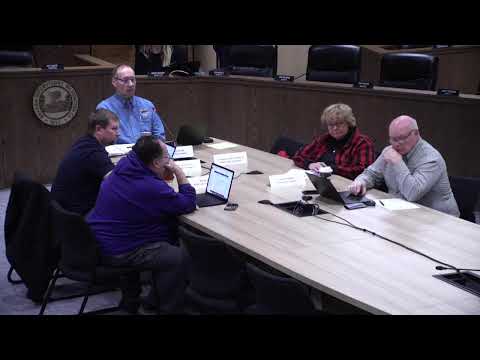
District Attorney Barry Braatz told the Washington County committee that he took office the prior Monday and that his office is operating with fewer prosecutors than the state workload analysis recommends.
Braatz said the office currently has five full‑time, state‑funded prosecutors and additional part‑time and ARPA‑funded positions. "So currently we're functioning at 5. Last year's workload analysis, by the state, indicates that essentially we need 8 full time attorneys within the office and we're currently at 5," he said. He warned that several positions depend on ARPA (American Rescue Plan Act) dollars that are "going away in July, or they are set to."
The funding mix Braatz outlined included five full‑time, state‑funded prosecutors; a 0.4 full‑time position funded by the state; one position that is 0.4 state‑funded and 0.6 ARPA‑funded; an unfilled 0.4 ARPA position; and a 0.2 county‑funded slot that has remained unfilled. He said the office has asked the state to convert ARPA‑funded time to full state funding but said the outcome is undetermined. "That has been our request, through the state, is that, the state does fully fund the ARPA positions," Braatz said.
Braatz also said the open position was recently posted and that he had already received applications, including from new law school graduates. "I've received some applications already, for the open position," he said, adding that some applicants would graduate in May. He described Washington County as a desirable place to work for prosecutors and said he expects the office will continue prosecuting cases despite the staffing gap.
Committee members asked whether prosecutor positions are normally funded by the state. Braatz replied that full‑time prosecutor positions "are funded through the state" and that some counties request local funding for additional prosecutors when workloads exceed state allocations. One committee member asked for clarification about which positions carry state funding versus ARPA and county funds; Braatz enumerated the funding mix and the role of the county's 0.2 position.
The discussion was informational; there was no formal motion or vote. Braatz said he will update the committee as hiring and funding developments occur.