Get Full Government Meeting Transcripts, Videos, & Alerts Forever!
Get email alerts on the Clean Energy topic
No spam. Unsubscribe anytime.
Green Bay schools get clean-energy roadmap; consultants recommend solar, electrification and tracking
Summary
District staff and McKinstry consultants outlined a staged plan to reach the board's carbon goals, recommending on-site solar to cover about 60% of electricity, a phased building electrification program and annual greenhouse-gas tracking; no board vote was taken.
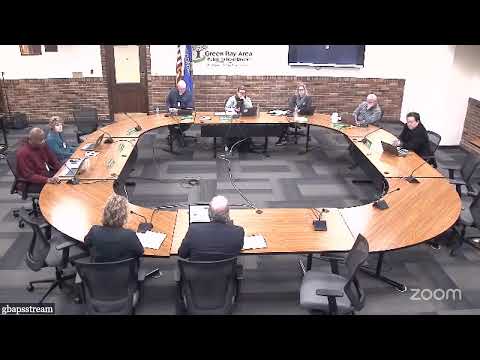
Green Bay Area Public School District officials and McKinstry consultants presented a multi-part roadmap on Jan. 13 to meet the district's resolution committing to 50% carbon-neutral district operations by 2035.
The recommendation, described by Cale Polchinski, chief operating officer for Green Bay Schools, as "a strategy and some points to get to that goal," groups five principal tactics: on-site solar, facility electrification, fleet conversion, facility improvements tied to capital planning, and off-site carbon-free utility procurement.
The consultants said their inventory shows roughly 58% of district emissions come from electricity and 42% from fossil fuels. Ryan Hoff of McKinstry said the analysis indicates on-site solar could provide about 60% of the district's electric needs, while "as long as the District is burning fossil fuels you cannot achieve the goal," underscoring the need to convert heating and other gas uses to electricity.
Why it matters: The plan ties energy upgrades to long-range capital planning and recommends timing equipment upgrades with scheduled replacements to lower incremental cost. McKinstry also recommended monitoring-based commissioning and retro-commissioning on lower-performing buildings to maintain efficiency gains and recommended standing up a district waste-diversion effort.
Details: McKinstry estimated the district could convert about two buildings per year beginning in 2028 and electrify roughly 5% of the non-student-transport fleet annually. The consultants noted student-transportation emissions were excluded because those buses are outsourced. They also flagged a near-term funding window for solar: available federal funds could potentially reduce upfront costs for arrays if the district acts promptly.
District staff said next steps include developing an electrification roadmap with phased priorities and cost estimates, increasing district solar capacity (preferably timed with roof replacements), formalizing waste-diversion pilots and creating public dashboards to share energy and emissions data with students, staff and the community.
Board reaction: Several board members praised student involvement on the Clean Energy Advisory Committee and stressed the need to ensure the plan 'including funding and timelines' "survives us" beyond any single board's term. Students who serve on the committee described their efforts to recruit peers and work with the City of Green Bay's sustainability commission.
No formal action: The presentation and recommendations were informational; the board did not take formal votes on the roadmap during the meeting.
Provenance: The Clean Energy Advisory Committee presentation and discussion appear multiple times in the transcript during the Jan. 13 work session; McKinstry gave the technical analysis and board members and students asked implementation and funding questions.