Get Full Government Meeting Transcripts, Videos, & Alerts Forever!
Get email alerts on the Comprehensive Plan Code Audit topic
No spam. Unsubscribe anytime.
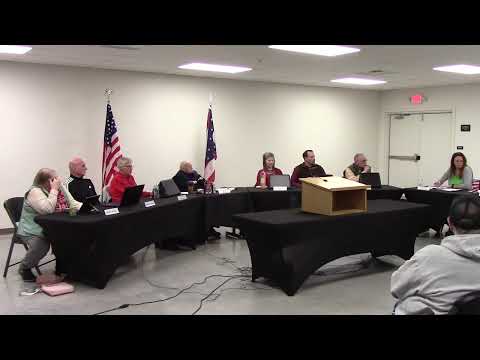
New Carlisle council directs staff to begin code audit while planning comprehensive plan update
Summary
Council discussion centered on updating the 2012 comprehensive plan and auditing conflicting zoning and property-maintenance codes; staff will produce an initial list of code sections for review in roughly 30 days and the council signaled support for citizen engagement and limited consultant use.
City staff and council members agreed to begin an internal audit of land‑use and property‑maintenance codes before undertaking any full rewrite of the City of New Carlisle comprehensive plan, with staff pledged to present an initial scope of code sections to review in about 30 days.
Council discussion opened with a briefing that the comprehensive plan (last updated in 2012) contains several outdated references — including a listing that Twin Creeks remains in foreclosure — and that local zoning and code provisions sometimes contradict the plan’s goals. A staff member summarized the problem: “There’s a lot of little things… that need to be adjusted,” and noted code sections governing outdoor storage, occupancy, accessory structures and signage are unclear in places.
Planning and code‑enforcement staff recommended conducting a targeted code audit first and running that work alongside a narrower comprehensive‑plan update. Staff cited specific code sections discussed during the meeting: section 1460.25(d) (prohibiting “all outdoor storage of any kind”), section 1280.20 (restricting outdoor display and storage visible from a street in residential and transitional districts) and section 1460.25(f) (temporary buildings and recreational vehicles). Staff said those definitions and cross‑references are vague and sometimes contradictory.
Councilmembers and staff said other Ohio cities typically hire a consultant for a comprehensive rewrite; staff reported seeing consultant contracts ranging up to about $100,000 and projects that can take roughly a year. Staff said that many municipalities perform some code cleanup before or in parallel with a comprehensive‑plan rewrite.
Key staff commitments and council directions recorded in the meeting were: - A staff member (asked by council) said he could identify which sections need review within about 30 days. - Council agreed to pursue an internal audit with citizen engagement committees to identify priorities and to collect public input. - Staff will seek ballpark estimates; managers warned that any consultant contract expected to exceed $50,000 would require a formal request‑for‑qualifications (RFQ) process under the city’s procurement rules.
No ordinance or contract was authorized at the meeting. Council and staff emphasized aiming for clearer, simpler code language to reduce confusion for residents and enforcement staff and discussed renaming “code enforcement” work to a less adversarial title such as “neighborhood revitalization officer” to improve community relations.
Council did not set a final schedule or appropriation for consultant services; staff said they would return with a prioritized list of code sections and cost estimates after the 30‑day review.