Get Full Government Meeting Transcripts, Videos, & Alerts Forever!
Get email alerts on the School Mental Health topic
No spam. Unsubscribe anytime.
Desert Oasis, Phoenix Rising present social‑emotional learning showcase and student supports to board
Summary
Desert Oasis High and Phoenix Rising showcased their social‑emotional learning program, counseling services and school‑based mental‑health supports, reporting counseling contacts, interventions and a new 'Impactor Pathway' advisory program.
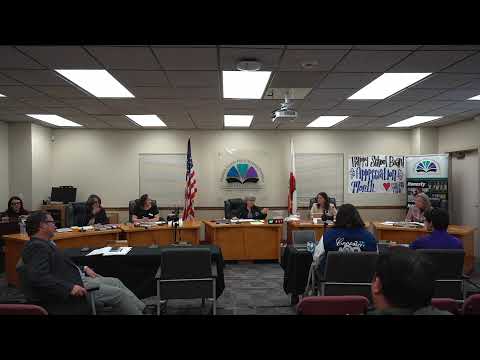
Desert Oasis High School and Phoenix Rising presented a social‑emotional learning (SEL) showcase to the board on Jan. 14, outlining counseling services, mental‑health supports, student publications and an advisory program that organizers said uses AI to help students explore career pathways.
Principal Julio Cesar Diaz described the campus as an opportunity site rather than a punitive placement and said staff work to ensure parents and students feel supported during transitions to the alternative setting. Counselors Priscilla Silva and Carla Silva described the counseling program’s three tiers of support — universal (tier 1), targeted (tier 2) and intensive (tier 3) — and listed recent outreach and interventions.
Priscilla Silva said the counseling team conducted classroom presentations (including a “meet the counselors” session and bullying‑awareness talks) across 22 classrooms and reported pre/post survey gains in students’ understanding of how to contact a counselor and the limits of confidentiality. The counselors also reported work on career preparation: 70 Imperial Valley College (IVC) applications were submitted and 60 Federal Student Aid (FSA ID) accounts created during recent workshops; five FAFSA submissions had been completed on the day of the presentation.
Sonia Gomez, the school‑based mental‑health specialist, said she provided individual therapy, crisis interventions and check‑ins. Gomez told the board that, across the semester, about 72 students received individual sessions or check‑ins. She described community resource referrals, two crisis interventions in September (suicide‑prevention month) and a range of student needs including depression, anxiety, past trauma and suicidal ideation. The campus also held workshops (a painting session and a yoga class) and a resource fair; students’ original poetry worked with SDSU professor Donna Castaneda was published in a local collection, Diaz said.
The presentation described an “Impactor Pathway” advisory program (noting January’s theme as curiosity) that includes culturally relevant materials and an embedded AI tool to help students explore career pathways based on responses. The campus said it has an ambassador program and plans continued outreach; the board received the presentation as informational with no formal action recorded at the meeting.