Get Full Government Meeting Transcripts, Videos, & Alerts Forever!
Get email alerts on the School Curriculum topic
No spam. Unsubscribe anytime.
Central Union students propose year‑long health elective, advisory presentations to modernize health education
Summary
Two Central Union High students presented a plan to the board seeking a semester‑long internet‑safety unit, advisory presentations and a proposed year‑long elective for upperclassmen to modernize health education.
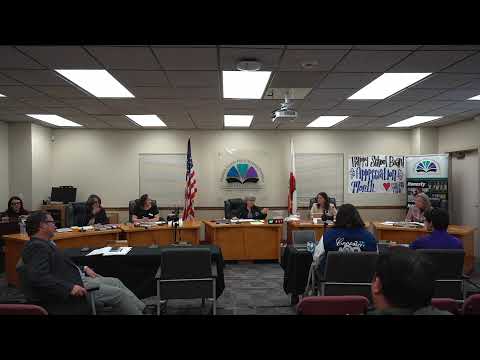
Two students from Central Union High School’s Team Advocating for Civic Action presented a proposal to the board on Jan. 14 seeking revisions to the district’s health curriculum, including a one‑year elective for juniors and seniors and recurring advisory presentations for sophomores.
“My name is Robert Garcia,” said one presenter as he and his teammate outlined the proposal, which the students said would “modernize the health education curriculum” by adding topics such as internet safety, mental and social health, nutrition, growth and development, alcohol and drugs, sexually transmitted infections and community health. The students asked that the elective count as a science credit and said advisory presentations would help reinforce 9th‑grade health lessons.
The presenters cited the California Health Youth Act (2016) as a legal framework they said allows expanded instruction on health topics at the district level. They also supplied local and national statistics during their presentation to explain student need and told the board they planned related outreach at a regional convention.
Brian (identified in the meeting as an instructor who introduced the students) said the students had been preparing for about a month and asked trustees to review the pamphlet they distributed. The students provided contact points — naming Principal Lyon and regional manager Denise Infante — and offered to return with further information and data if the board requested it.
The presentation was received as an informational item; no formal board vote or action on curriculum adoption was recorded at the meeting. Trustees were offered the pamphlet and the students’ contact details for follow‑up.