Get Full Government Meeting Transcripts, Videos, & Alerts Forever!
Get email alerts on the Signage Variance topic
No spam. Unsubscribe anytime.
Board of Adjustment approves signage variance for Pensacola Boulevard fuel store
Summary
The Escambia County Board of Adjustment on Jan. 15 approved variance v-2025-1 allowing additional pylon and wall signage for a convenience and fuel retail site on Pensacola Boulevard, voting 5-0 to accept staff recommendations.
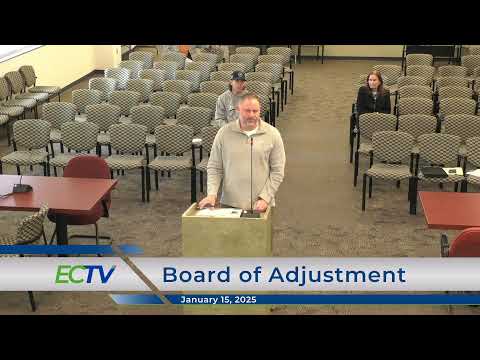
The Escambia County Board of Adjustment on Jan. 15 approved variance v-2025-1 to allow additional freestanding pylon and wall signage for a proposed convenience and automotive fuel retail store on Pensacola Boulevard, voting 5-0 to accept staff findings and recommendations.
Staff presented the case and recommended approval. Melissa Shirley, Development Services staff, told the board the parcel is an approximately 8.4-acre corner lot at the fork of two arterial roads (Highway 29 and Highway 97) with a grade change that reduces visibility for approaching traffic. Shirley said the applicant asked to place two pylons (one abutting each arterial) with pylon signage including fuel pricing and to add wall signage on the façade facing Highway 29. She said the requested pylon height is approximately 32 feet and that the proposal is “typical to similar convenience and automotive fuel retail stores within Escambia County.”
The applicant, Matt Zinkie, a civil engineer with Jenkins Engineering representing the applicant, told the board the site will be operated by Casey’s (which recently purchased the local SEFCO stores) and that the signage package reflects Casey’s standard signs. "Having that standard pylon height and size allows the visibility they need to allow vehicles approaching to give them time to make decisions," Zinkie said, adding that driveways must meet Department of Transportation spacing requirements on the arterials.
Shirley reviewed the variance criteria from the land development code, including the technical conditions in section 5-82D, and concluded strict application of code provisions would create unnecessary hardship due to the site’s corner configuration, grade and roadway geometry. She noted that under the RMU (Residential Mixed-Use) zoning district a single freestanding pylon is normally limited to 10 feet in height and 50 square feet, and that the applicant’s request includes both additional height and a second pylon plus complementary wall signage. Shirley said the overall proposed signage is consistent with other similar uses and recommended approval.
Board members asked a small number of technical questions. One board member asked whether a nearby gas station’s sign height was greater; Shirley said the nearby sign is maxed out at 35 feet and the applicant’s request is for 32 feet. The board chair reminded members that electronic or changeable message reader boards would be subject to additional permitting criteria at the permitting stage.
No members of the public spoke; an individual identified as Andrew Veil was present but declined to comment. Board member Willie moved to approve the variance according to staff findings; the motion was seconded and passed on a 5-0 voice vote. The board’s approval was recorded as acceptance of staff’s recommendation for case v-2025-1.
Staff and the board identified procedural safeguards and appeal rights: the staff noted additional technical sign criteria in the Land Development Code (section 5-82D) and the chair reminded the public that ex parte communications are governed by Board of County Commission Resolution 96-13 and by Florida law. The board also reviewed its routine procedural business earlier in the hearing (accepting the meeting package and approving minutes) before taking the variance action.
The Board of Adjustment is a quasi-judicial body; staff earlier in the hearing reminded participants that testimony is under oath, evidentiary rules apply, and decisions on variances and conditional uses may be subject to judicial review within statutory timelines. The board’s next meeting was noted as Feb. 19, 2025.