Get Full Government Meeting Transcripts, Videos, & Alerts Forever!
Get email alerts on the Transportation Pedestrian Bike Safety topic
No spam. Unsubscribe anytime.
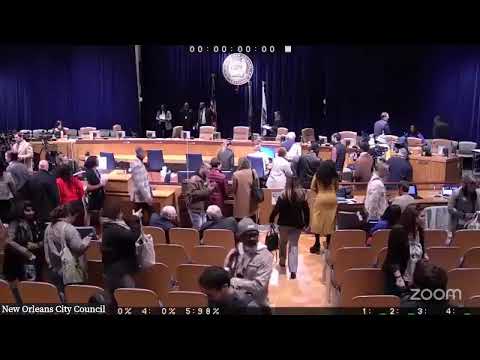
Council accepts federal reconnecting-communities grant to add pedestrian and bike connections in New Orleans East
Summary
The City Council voted to accept a federal Reconnecting Communities grant to fund pedestrian and bicycle connections across service roads in New Orleans East, launching a five-year federally managed design-and-construction timeline and additional community engagement.
The New Orleans City Council voted to accept a federal Reconnecting Communities grant to build pedestrian and bicycle connections across service roads and interstates in New Orleans East, officials said.
City staff said the federally funded program includes community-driven design work, public meetings and a five-year performance period managed by Federal Highway Administration. “So we began, it was really important to the city to have a community engagement process when we were undertaking the feasibility study,” a city staff member said during the presentation.
The grant will fund a feasibility-to-construction sequence: an 18-month design and community engagement and bidding phase, with a September 2026 milestone that staff said is an obligation in the grant agreement; anticipated construction was described as fall 2026 through fall 2029. “The grant period is for a performance time of 5 years, and that is very, very specifically managed by federal highways,” the staff member said. Staff also said the grant funds technical assistance through the Reconnecting Communities Institute and that consultant contracts selected through requests for proposals will require Council approval.
The council discussion and public comments focused on where new connections would link residents to daily destinations and whether the city has budgeted for long-term upkeep. Council Member Morel asked about maintenance costs for bridges and overhead walkways, citing concerns that poorly maintained structures can fall into disrepair: “It really would be helpful for you to let us know what the ongoing maintenance cost might be so that we can budget for those,” Morel said. Community speakers and organizations, including Orleans Ghost Bikes and the Complete Streets Coalition, urged approval and pointed to pedestrian fatalities along service roads as a reason to improve crossings.
Presenters said community input informed the selected connection points. A member of the public who participated in the feasibility process described mapping sessions that identified destinations not visible on a standard map. “A lot of the destinations that are listed since the second connect were determined at these meetings with our community and the locals who live in these communities with a map with post it,” Arlene Laspagna, executive director at IKC, said.
Council members also asked how changes to the grant scope would be handled. Staff said significant scope changes would require U.S. Department of Transportation approval and could reduce or remove related federal funding. “If you remove a component of the grant, funding gets removed as a result,” a staff member said.
The motion to accept the grant was moved and seconded on the council floor; a roll-call tally was not recorded in the public transcript and the presiding officer announced, “Ayes have it, so ordered.” The council will return for approval when consultant agreements are presented.
Why it matters: City staff described the project as a multi-year, federally managed program that moves from concept (feasibility) to design and construction with explicit federal deadlines and required approvals. The council and residents emphasized maintenance, transit access and the need for detailed design-phase public meetings before specific structures or crossings are finalized.
Next steps: Staff said they will return to the council after a consultant is selected. The design phase, public engagement, and request-for-proposal work will be completed before construction procurement. The grant agreement obligates a September 2026 design milestone and a five-year project performance period managed by the Federal Highway Administration.