Get Full Government Meeting Transcripts, Videos, & Alerts Forever!
Get email alerts on the Neighborhood Mandatory Connection Policy topic
No spam. Unsubscribe anytime.
Utility Policy Committee to draft mandatory-connection language for neighborhood water extensions
Summary
The Utility Policy Committee (UPC) agreed to draft language adding a mandatory-connection condition to its neighborhood water-extension policy so townships can require properties to connect when private wells fail. The committee directed staff to prepare language for review at the next meeting.
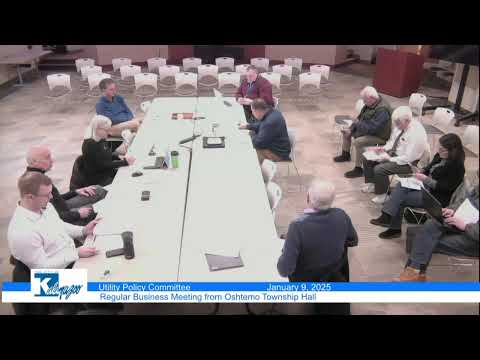
The Utility Policy Committee on Jan. 9 directed staff to draft language to add neighborhood-by-neighborhood mandatory-connection provisions to the UPC's neighborhood water-extension policy, after hearing a legal opinion from Comstock Township that such a targeted ordinance is enforceable.
Committee members said the change would let townships require property owners in a defined project area to connect to a public water main when a private well fails, while limiting the geographic scope so owners outside the project area are not captured. The committee asked staff to return a proposed amendment for review at the next UPC meeting.
That amendment would let a township submit a petition to the UPC that states the township is willing to adopt a mandatory-connection ordinance limited to the described neighborhood. Under the draft approach discussed, petition signers would acknowledge three items before a project proceeds: the estimated connection cost, that the property will be required to connect when the well fails, and the geographic legal description of the mandatory-connection area. Committee members noted a 50% petition-signature threshold was the working assumption discussed by the subcommittee.
Tom Lee, a regional commission representative, described the Comstock Township attorney's legal opinion that a township can add a legal description for a project area into an ordinance and require mandatory connections on that block-by-block basis. "That is the legal opinion of Comstock Township's attorney," Lee said when summarizing the guidance from counsel (legal counsel named in the meeting: Catherine Kaufman, Buckham, Spak & Sparks).
Speakers and members raised financial and practical considerations. James Baker, Kalamazoo Public Services director and city engineer, summarized estimated costs: a capacity buy-in fee of about $6,000 plus on-site connection costs could make total per-property connection costs roughly $11,000 to $12,000 today; those connection charges will rise over time as actual costs are used to set fees. Committee members noted that greenfield installation costs are roughly 30% lower than building mains in established neighborhoods, meaning the system is already partially subsidizing neighborhood extensions.
Members emphasized two policy goals: protect the utility's financial health by avoiding open-ended subsidies to neighborhoods where few residents may ever connect, and preserve water quality and system viability by encouraging eventual connection. Some members said mandatory connection, enforced when wells fail or when a well-permit is denied because sewer/water is available, aligns with the county's and townships' existing approaches to sewer connections.
The UPC asked a small subcommittee (James Baker, Tom Lee and Tim Hudson) to draft specific neighbor-by-neighborhood mandatory-connection language and return it for committee review at the February meeting. The committee also agreed it would share the draft with the regional commission before adoption to solicit township feedback.
The committee did not adopt an ordinance at the meeting; members directed staff to prepare draft policy language and bring it back for formal consideration.
Ending: The UPC set a follow-up for February 13 to review proposed mandatory-connection policy language and recommended sharing the draft with the regional commission and affected townships before consideration.