Get Full Government Meeting Transcripts, Videos, & Alerts Forever!
Get email alerts on the Land Use topic
No spam. Unsubscribe anytime.
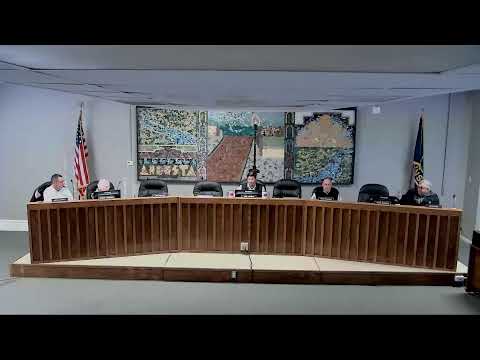
Augusta planning panel tables event‑center conditional use; board approves reduced rear setback for 427 N. State St.
Summary
The Planning Commission postponed a decision on a conditional use permit for an event center at 427 North State Street to allow more information about operating hours and other conditions; the Board of Zoning Appeals approved a variance reducing the rear setback to accommodate ADA upgrades and internal renovations.
The Augusta Planning Commission on Wednesday tabled consideration of a conditional use permit for an event center at 427 North State Street, while the Board of Zoning Appeals approved a variance that will allow the building to be set back as little as 5 feet from the rear property line so the owner can add ADA‑compliant restrooms and exits.
The conditional use permit, filed as CUP 2025‑02, would allow a multipurpose meeting and event center in a C‑1 Main Street Commercial district. Planning staff recommended approval subject to site plan conformance and building code compliance, but commissioners decided to postpone final action to get additional information about proposed operating hours, noise controls and parking. A motion to table the CUP carried by voice vote.
The planning staff report noted that an essentially identical use was previously approved in 2013 for the combined property (filed under 429 North State) but that the earlier CUP expired after 180 days under prior zoning rules when no building permits were pulled. The current owner acquired the property in 2010 and the building has been vacant for many years, staff said. The application included a site plan and exterior photos; staff found the request consistent with the Augusta Action Comprehensive Plan 2020–2040 and with surrounding C‑1 zoning, and listed standard conditions to reduce potential impacts.
Neighbor Tracy Everhart, who identified herself as the owner of 431 State Street, the building directly next door, urged care in approving the use and raised structural and safety concerns about the adjoining building and past damage she says occurred during earlier work. “I do wanna see the improvements done. I wanna see something move forward with this building,” Everhart said, but added she wanted assurances the renovations would not further damage her property. She also asked about rear egress, flooding into her basement, ongoing exterior maintenance and potential noise and parking impacts on upstairs apartments.
Bill Morris, the project architect, told the commission his firm rebuilt the roof structure in earlier work and that the building is “structurally sound.” Morris said the current plans add an accessible ramp and a second exit to meet code and that when renovation proceeds the work will address alley exiting, bathroom additions and an elevator to serve the second floor. He also said the team intends to restore the historic front facade to its appearance when the building operated as Calvert’s.
Planning staff and commissioners discussed noise and hours of operation as conditions that can be attached to a CUP. Tammy (planning staff) told the commission that specific operating hours and limits on outdoor music can be required as part of the conditional use permit and that the city noise ordinance would also apply. “You can put whatever conditions you want on the operations of the business,” Tammy said, providing examples such as requiring events to end by midnight on weekend nights and earlier on weekdays.
Because those operational conditions must be set at the time the CUP is approved, commissioners moved to table CUP 2025‑02 and asked staff to return with more detail about proposed hours, any public‑safety records (calls to 911) and clarifications from the applicant about intended uses, including whether portions of the second floor would be residential. The applicant indicated a plan to move an existing linen business from Andover to a ground‑floor/office component of the property while developing the remainder as event space.
Separately, while convened as the Board of Zoning Appeals, the body considered BZA 2025‑01, a variance request to reduce the required rear setback (zoning code 20 feet) to 5 feet and 10 feet in locations shown on the proposed site plan. Staff recommended approval if the board found the five statutory criteria for a variance were met, citing the difficulty of retrofitting historic downtown buildings to meet ADA requirements without encroaching into the rear yard. The board approved the variance with standard conditions requiring conformance with the approved site plan and all zoning and building codes. A board member noted that variances in the district are commonly needed because older buildings often extend to the property line.
Under the zoning code, an approved variance is valid for 180 days from the hearing date, and the code allows one extension; staff and commissioners discussed coordinating the timing of the CUP and the variance so both approvals, if granted, would align with the permit‑pulling deadlines. The variance approval specifically allows the owner to proceed with construction that would create the restroom and egress improvements necessary to use portions of the building for public assembly while meeting accessibility standards.
Actions taken at the meeting will not themselves compel renovation; planning staff emphasized that a CUP or variance is exercised when a building permit is pulled and work is substantially started. If permits are not pulled within the time limits the approvals expire and the owner would have to return to the commission or board.
The commission and board asked staff to return at a later meeting with additional details about proposed operating hours, any public‑safety complaints or calls related to downtown noise, and a clearer schedule from the applicant about when renovation work and permit applications would proceed. The CUP remains pending; the variance is approved subject to the conditions noted in the staff report.