Get Full Government Meeting Transcripts, Videos, & Alerts Forever!
Get email alerts on the Downtown Businesses topic
No spam. Unsubscribe anytime.
Multiple downtown small-business owners tell Lansing council Downtown Lansing Inc. failed to deliver promised support
Summary
Six entrepreneurs and former owners told council they faced broken promises, lack of basic resources and landlord problems while participating in Downtown Lansing Inc.'s Middle Village/Bridal Village programs; speakers asked council for oversight and stronger enforcement of landlords and DLI accountability.
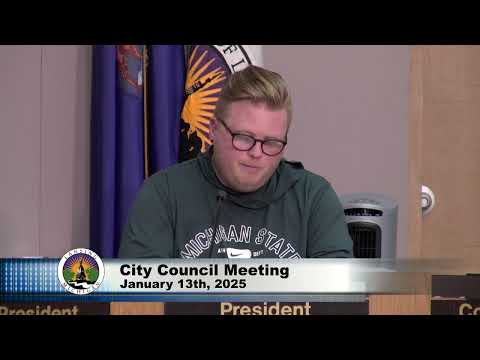
Several current and former downtown small-business owners addressed the Lansing City Council during public comment on Jan. 13, 2025, alleging repeated failures by Downtown Lansing Inc. (DLI) and property owners to deliver on promised relocation and small-business supports.
Ashley Rogers, owner of Sedona Wanderlust Boutique, said the Middle Village program failed to provide basic supports such as Wi-Fi and adequate retail visibility and that participating businesses were "tokenized." Rogers said the program left operators "to fend for ourselves" and that promised SBDC coaching and other supports did not materialize.
"On paper, it seems that this program is supposed to uplift and empower small businesses...unfortunately, we were denied any of that type of representation," Ashley Rogers said.
Fawn and Luke Donald, former owners of Nivelease, described negotiations that included written assurances of funds that they said were never delivered, hazardous building conditions the landlord failed to fix, and what they called inconsistent assistance from DLI. They said the situation left them unable to operate and forced them out of downtown.
"The relocation process became a series of escalating challenges...the lack of accountability left us to shoulder the burden of hazardous conditions and significant financial strain," Fawn Donald said.
Liz Krueger said she and a co-owner signed a contract after DLI recruitment but were prevented from using the leased time because buildout and access problems delayed their opening; she said her business later faced collection action on a loan she accepted based on an expected $50,000 reimbursement that did not come.
Amara Hadi, owner of Hadi Collective, said leased spaces lacked finished flooring, ceilings and Wi-Fi, and that retail signage restrictions and unclear communications limited customers' ability to find stores and slowed market-building. Deirdre Westfall, owner of Nature's 92, also described an overall "distasteful" experience and stood in solidarity with other business owners.
Speakers asked the council to review DLI's stewardship of public funds and consider stricter oversight, penalties for noncompliant landlords and greater transparency. Fawn and Luke Donald said they had provided documentation to the city and that DLI had threatened them with a libel claim.
Mayor Andy Schor noted earlier in the meeting that the city provides facade and other grants and that $175,000 was allocated in the budget for facade work; he and council members responded in the meeting by expressing sympathy and inviting further action.
Why it matters: Downtown business retention and growth are central to Lansing's economic-development strategy. Multiple speakers delivering similar complaints about DLI and landlords could prompt council oversight, audits of public dollars routed through DLI, and reviews of landlord compliance with building and code obligations.
What comes next: At least one council member asked whether the internal auditor could review DLI expenditures of public funds. Business owners asked the council to evaluate DLI's performance and consider stronger landlord enforcement; no ordinance or vote was immediately taken on Jan. 13.