Get Full Government Meeting Transcripts, Videos, & Alerts Forever!
Get email alerts on the Downtown Signage topic
No spam. Unsubscribe anytime.
Design review board approves Salina Selfie Station sign and limited transom painting with conditions
Summary
The Downtown Design Review Board voted to allow a 4-by-10.5-foot internally illuminated sign for new tenant Salina Selfie Station and approved painting the glass transom black, limiting paint to the transom and metal beams; both approvals were conditional and carried a 14-day protest period.
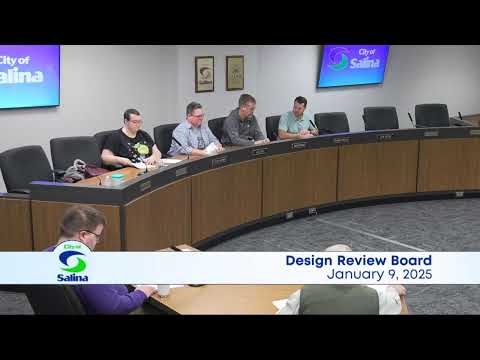
On Jan. 9, 2025, the Downtown Design Review Board approved a new wall sign and a limited exterior painting for the storefront that will house Salina Selfie Station, subject to conditions and a 14-day protest period.
Staff said the proposed sign would be a 4-foot-by-10.5-foot cabinet mounted within the glass transom above the building entrance and internally illuminated so that only the letters and logo are lit. The business owner also asked for permission to paint the transom black to provide a backdrop for the sign. Planning staff told the board the project sits in the Downtown Business Improvement District and must meet the board’s design guidelines and the C4 sign provisions.
Staff described two key findings supporting approval: the building’s masonry has been painted historically and the proposed black transom would be compatible with two storefronts to the south, including the transom at 115 South Santa Fe (Salina Chiropractic), which the board approved in 2020. Staff also cautioned that the transom is an original, character-defining element and noted cleaning and repair as alternatives. Staff recommended approval with conditions, including that painting be limited to the transom and metal beams and that the sign cabinet be modified so only the letters and logo are internally illuminated.
Planning staff said the sign contractor, Gleason and Son Signs, proposed attaching the sign by bolting an angle iron to the existing metal beam so the sign would hang within the transom and would not be anchored into the glass. The applicant addressed staff questions about existing gooseneck lamps used to illuminate the awning and said the lamps “are functioning, and we would leave them in place.”
Board member Freeland announced he would recuse himself from both votes because he had worked directly with the applicant and had designed the logo. The board then voted on two separate motions. A motion to approve the exterior painting limited to the transom and metal beams passed 3-0 (Freeland recused). A subsequent motion to approve the sign with the staff-recommended conditions, including the lighting modification, also passed 3-0 (Freeland recused).
Following approval, staff said there is a 14-day protest period; after that period the city will issue a letter and the sign permit may be released. The applicant was told staff already holds an executed permit and can release it after the protest period if no valid protest is filed.
The board’s decision records the installation method (angle iron bolted to the existing metal beam) and the condition that the sign face remain opaque except for the illuminated letters and logo. The board discussed the risk that painting a character-defining feature could prompt future repainting and higher maintenance costs, and staff noted cleaning and repair as alternatives, but found the proposed work could be compatible under the stated conditions.