Get Full Government Meeting Transcripts, Videos, & Alerts Forever!
Get email alerts on the Neighborhood Enterprise Zone 20201 Livernois topic
No spam. Unsubscribe anytime.
Developers seek neighborhood enterprise zone, commercial abatement for 20201 Livernois mixed‑use project; council schedules return hearing
Summary
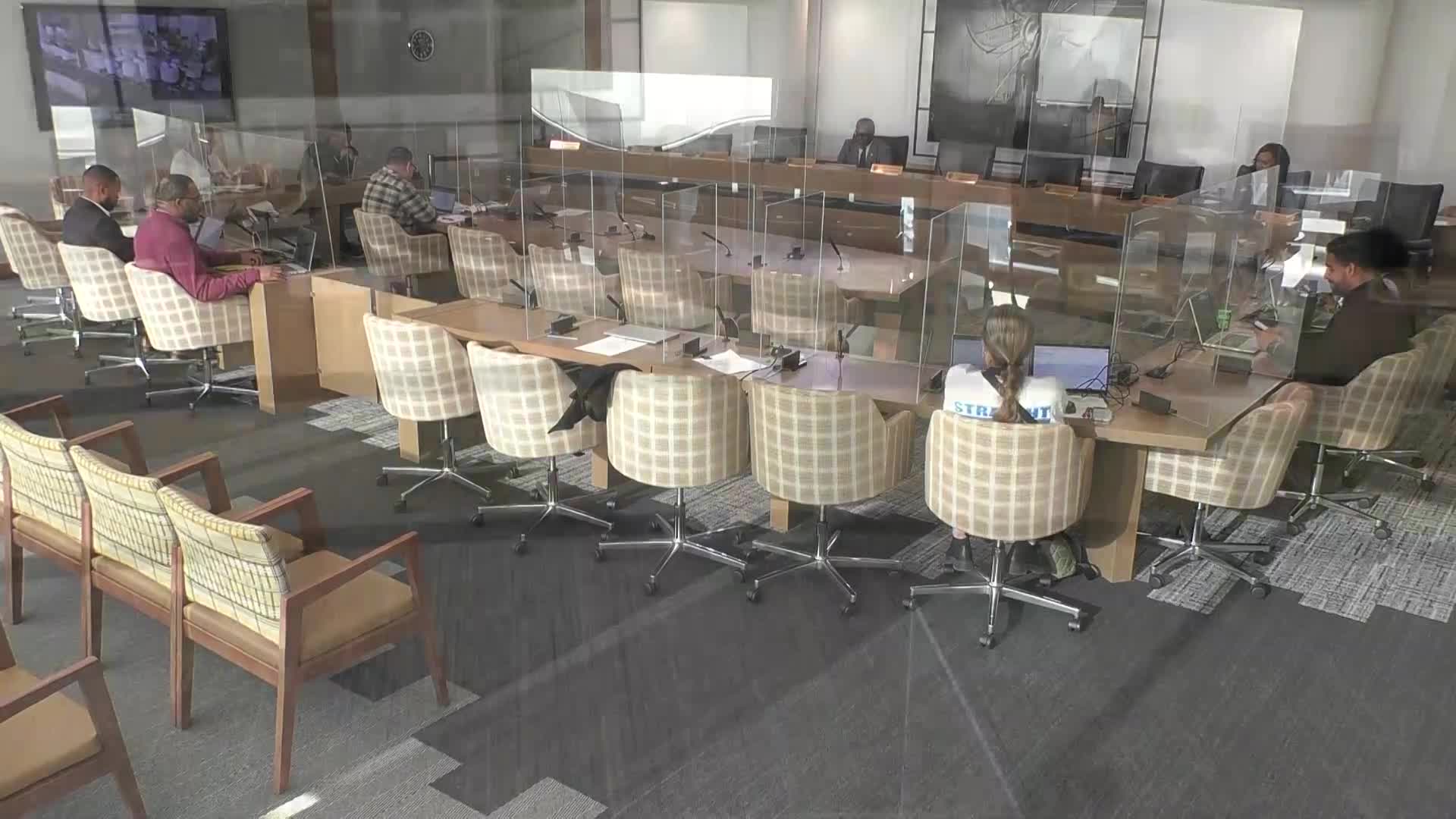
Developers seeking tax incentives for a mixed‑use project at 20201 Livernois described the proposal and answered public and council questions during a Planning, Economic Development & Mobility Committee hearing, and the committee agreed to bring the item back for formal consideration on March 13.
Developers seeking tax incentives for a mixed‑use project at 20201 Livernois described the proposal and answered public and council questions during a Planning, Economic Development & Mobility Committee hearing, and the committee agreed to bring the item back for formal consideration on March 13.
The project team, led by Kevin Schroeder of Brown Schroeder & Company and Kevin Brandon of BMK Design & Planning, requested two district designations: a Neighborhood Enterprise Zone under Public Act 147 of 1992 and a Commercial Rehabilitation Exemption District (commonly called a PA 210) that could support an abatement certificate later. Nicole Scott of the Detroit Economic Growth Corporation (DEGC) and Yvette Jemison of the Housing & Revitalization Department (HRD) also presented details.
“The proposed mixed‑use development is located at 20201 Livernois,” Scott told the committee, saying the total development cost is $14,200,000 and construction completion is expected in spring 2027. The plan calls for 50 for‑rent residential units — 12 studios, 34 one‑bedrooms and 4 two‑bedrooms — plus about 7,120 square feet of ground‑floor retail space, and residential space of about 39,621 square feet. The presentation estimated 46 temporary construction jobs and 26 permanent full‑time jobs tied to the project.
Why it matters: the two district requests are the first step in a process that, if approved by council and the Michigan State Tax Commission, would make future exemption certificates available for property owners who commit to specified investments. The DEGC presentation said an assessor’s office letter dated Aug. 19, 2024, found the site eligible for the commercial rehabilitation district; the city’s staff recommended establishing districts to support future investment but said any final term of abatement would be decided when a certificate application is submitted.
Details of the project and incentives: the developers said the building would total about 46,741 square feet and include residential amenities such as a roof deck, pet wash and secured bike parking. Schroeder said the team would redevelop the former Fred’s Furniture building and reuse the existing basement to add below‑grade parking. “We plan on starting as soon as possible… probably mid to late summer,” Schroeder said; he added a conservative construction schedule of about 18 months.
Affordability and AMI: the team said 11 of the 50 units (about 22%) would be income‑restricted at different Area Median Income (AMI) levels: several studios at 80% AMI, some one‑bedrooms at 60% AMI and two two‑bedrooms at 70% AMI. Nicole Scott clarified AMI dollar limits cited by staff during the hearing, saying, for example, 80% AMI for a one‑person household was $53,760 and 60% AMI figures were in the mid‑$40,000s as presented.
Parking, accessibility and sustainability: the developers said the plan would provide parking in an existing basement (27 spaces) plus surface parking (reported as 37 spaces), and they stated a total of 63 spaces overall (the project requires 55 under current ordinance). The team said they would include EV infrastructure, stormwater detention to meet DWSD thresholds for the site (about 0.57 acres), two fully accessible ADA units (beyond the Type A requirement) and several measures for recycling and energy efficiency.
Public comments and community engagement: the committee heard nearly a dozen callers during the hearing. Hazel Flood, president of the Garden Homes Community Organization, said the developers had attended neighborhood meetings and that the community organization supports the project: “They have came to our meeting… we approve it,” Flood said. Several callers and a council member raised concerns about outreach to immediately abutting residents. Council Member Leticia Johnson pressed the developers specifically on whether they had knocked on doors of neighbors directly behind the site; Kevin Schroeder said he had met some private residences and had participated in regular meetings with Garden Homes and Green Acres organizations and pledged to increase direct outreach to immediate neighbors.
Opposition and concerns: multiple callers objected to the proposed unit mix and small studio sizes, urging more family‑sized housing. Caller Tahira Ahmad said, “We don’t want these little teeny studio apartments… This is not family friendly.” Other public commenters asked whether Black‑owned contractors or developers would participate. Ruben J. Crowley Jr. asked, “Is there any African American involvement here in this project?” Schroeder said the project did not have Black equity partners but noted the retail tenants include minority‑owned businesses.
Council questions and administration responses: council members pressed the team on unit AMI allocations, the developers’ record on building‑code issues, parking pricing and how tenant parking would be charged. The developers said the 11 income‑restricted tenants would not pay for parking, while market‑rate units would be charged a monthly fee (the team cited a current figure of about $50–$75 but said terms could change). Chair Pro Tem James E. Tate Jr. and members asked for clearer door‑knock outreach documentation and for more detail on unit occupancy and the developers’ other properties; Member Johnson requested occupancy rates for the developers’ existing buildings before the item returns.
Committee action: rather than vote on a certificate or abatement, committee members set a statutory waiting period and voted to return the district requests to the committee as line items on March 13 for further consideration. Council Member Fred Durhall III (vice chair) moved to bring the line item back on March 13; the motion carried by unanimous consent with no objections.
What’s next: the March 13 hearing will be the public juncture where the committee again reviews the district requests and any certificate application. The developers and city staff will be expected to provide additional documentation on neighborhood outreach to immediately abutting residents, clarified AMI/unit allocations, occupancy and parking management, and the formal PA 210 report that city staff indicated they would reissue before the item returns.
Lede closing note: The committee did not grant any tax certificates or abatement at this hearing; it scheduled further review and asked the developers to expand direct outreach to nearby residents and to supply additional documentation ahead of the March 13 return date.