
Environmental health staff outline county-by-county services: pools, septic systems, nuisance enforcement
Get AI-powered insights, summaries, and transcripts
Subscribe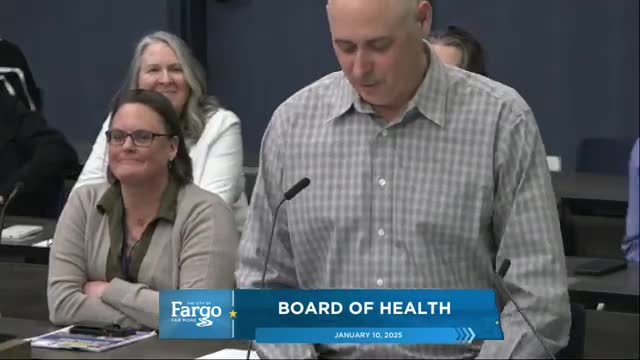
Summary
Fargo Cass Public Health environmental health director presented which environmental programs are adopted or advisory across the six-county region and described common nuisance complaints and on-site sewage responsibilities.
Grant Larson, director of environmental health at Fargo Cass Public Health, briefed the board on county-by-county environmental health services and which programs are adopted by ordinance or provided in an advisory role across the region.
Larson presented a program map showing that Fargo provides the full suite of core environmental health services. West Fargo operates under an MOU for a subset of services. Among the six southeast counties, adoption varies: Richland, Sargent and Ransom counties have adopted on-site sewage (septic) regulations by ordinance; other counties use advisory services or rely on state code for nuisance enforcement. Larson noted that aquatics/pool programs are adopted by ordinance in some counties and advisory in others.
Larson described common nuisance complaints: in Fargo the biggest nuisance category is grass and weeds; in outlying counties nuisance complaints more often involve blighted buildings, rodent harborages and accumulations (for example tires) that can breed mosquitoes. He explained that if an abatement imposes costs, the county or township process and funding routes apply and that state Century Code can be used when local ordinances are not in place.
Ending Board members thanked Larson; staff said they will continue to provide advisory services where ordinances have not been adopted and to support counties that choose to adopt additional programs.