Get Full Government Meeting Transcripts, Videos, & Alerts Forever!
Get email alerts on the Wastewater topic
No spam. Unsubscribe anytime.
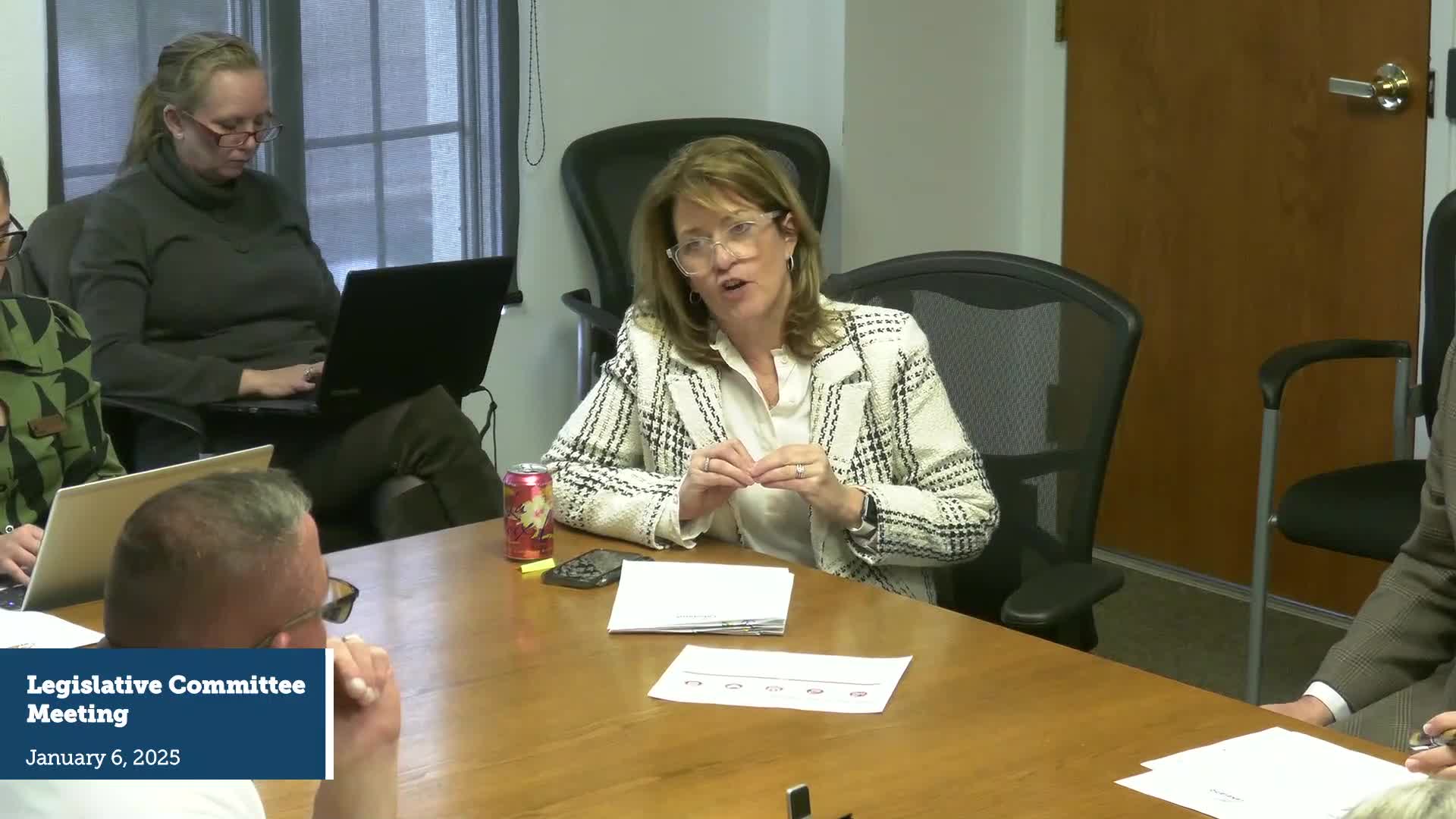
Lakeland legislative committee narrows state asks to Western Trunk wastewater work and Fire Station 8
Summary
The Lakeland City Commission's legislative committee agreed to focus its 2025 member-sponsored budget requests on two principal items: phased work on the Western Trunk wastewater project and partial state funding for a new Fire Station 8.
The Lakeland City Commission's legislative committee agreed to focus its 2025 member-sponsored budget requests on two principal items: phased work on the Western Trunk wastewater project and partial state funding for a new Fire Station 8. The committee decided to present those narrowed asks to the full commission and then to the city's legislative delegation during committee weeks.
The committee said it will package larger wastewater needs into smaller, bite-sized proposals that are more likely to be accepted in a tight state budget year. Staff identified near-term pieces of the Western Trunk already in motion (two upcoming construction phases budgeted at about $12 million and $16 million) and noted that easement acquisition and other preconstruction work could be scoped as lower-dollar, member-friendly asks. The committee also confirmed it has allocated some ARPA funds toward related projects and plans to show state partners that the city will have local and federal contributions alongside any state support.
Why it matters: city officials said narrowing the requests helps make a clearer, more compelling case to legislators and reduces the risk of asking for large, single-year appropriations in a year when lawmakers expect to limit high-dollar member projects. Wastewater projects statewide drew renewed attention after a recent round of storm impacts; staff cited the scale of unmet demand in the state's DEP grant portal as context for pursuing targeted state assistance now.
Details of the wastewater priorities: staff ranked projects in order of operational need and work already underway. The Western Trunk was given the top priority because initial phases are funded and construction is active; staff said the next phases of work remain to be funded and can be packaged into modular requests. Basins 40 and 41 were listed as high-need areas because of inflow and infiltration problems; staff described their locations roughly around the west side of Florida Avenue near 98 South (basin 40) and the area south of Joker Marchant near Lakeland Hills extending toward Lake Parker (basin 41). The committee also discussed the Eastern Trunk Gravity Sewer Main, a large project for which the $100,000,000 figure described by staff was explicitly identified as a preliminary estimate rather than a finalized engineering number. Finally, a downtown master pump station (Forest/Main) was described as lower in dollar value but dependent on Western Trunk capacity.
Fire Station 8: the committee supported pursuing partial state funding for a new Fire Station 8, noting the city has already set aside local funds and would present evidence of local contribution (including ARPA funds) to strengthen a member-sponsored ask. Committee members stressed the value of showing state legislators the city is "skin in the game" rather than requesting full state funding.
State funding context and strategy: staff warned that year-to-year constraints mean "asks over $1,000,000 are going to be few and far between," and recommended member-sponsored projects be sized accordingly. The City will pursue committee-week meetings and targeted delegation appointments to make the case while also applying through state grant portals (for example, DEP wastewater grant processes) where appropriate. Staff noted the DEP portal previously received far more demand than available funds (staff referenced approximately $1.2 billion in requests versus roughly $200 million available in a prior cycle), underscoring competition for wastewater appropriations.
Committee direction and next steps: the committee asked staff to (1) break the Western Trunk and related wastewater needs into discrete, smaller funding pieces (e.g., easement acquisition, segmented construction phases), (2) prepare concise materials that show local/federal matching funds and overall project scale, and (3) present the narrowed priorities to the full commission for approval before the delegation meeting. Committee members identified committee weeks in early February as the optimal time to advance member requests while the budget is still malleable.
Meeting context: committee members said the narrowed approach aims to make the city's requests more digestible during short delegation meetings and to avoid presenting a long booklet of competing asks. Staff and outside consultants will continue to monitor state committee schedules and grant portals during session and will notify commissioners when items on a watch list merit immediate attention.
Ending: the legislative committee will propose the narrowed package to the full commission and intends to seek delegation support during committee weeks; staff will return with segmented cost breakdowns and supporting documentation for the prioritized requests.