Get Full Government Meeting Transcripts, Videos, & Alerts Forever!
Get email alerts on the Business License Fees topic
No spam. Unsubscribe anytime.
East Lansing council debates restructuring business license fees, asks for data on police calls
Summary
City council members discussed proposed changes to fees for entertainment and other business licenses, heard staff estimates of potential revenue and policing costs, and asked for more data on police call patterns before deciding on a new fee structure.
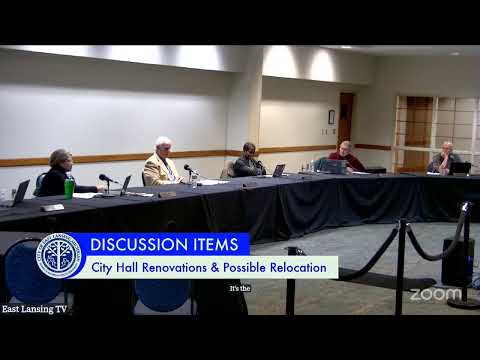
City Manager Ivan Beilman told the City Council of the City of East Lansing on Jan. 14 that staff has proposed changes to five business-license categories and mailed affected businesses a notice on Dec. 19, 2024, to solicit feedback.
Beilman said the recommended fee changes aim to recover city costs tied to public-safety responses and administrative processing. “Proposed fees as presented on the November 19th would generate $91,010 based on the list of businesses in these 5 categories,” Beilman said, and he cited an estimated police overtime cost of about $196,000 as part of the rationale for the review.
Council members focused most of their discussion on the entertainment-license category, which staff proposed moving to a flat $10 per occupant fee. That proposal drew concern from Council Member Altman, who questioned replacing the existing progressive structure — lower per-occupant rates for smaller venues and higher rates for larger ones — with a flat rate. “My hunch is that you're gonna end up with more than 10 times the police activity for the establishment with occupancy of a 1,000,” Altman said, adding that “crowds feed on themselves potentially, so the larger the crowd, the more potential action you're gonna see.”
Several council members and staff agreed that the management practices of individual businesses, the geographic concentration of late-night activity downtown and the city’s preventive policing presence complicate directly tying fee levels to police costs. Council Member Meadows and others asked staff to map police calls by location and to identify which businesses generated the most calls so the council could evaluate whether fees were aligned with actual service costs.
Beilman noted the council currently has a moratorium on the categories under review that affects the current fiscal year, and he said the city previously estimated similar fee levels would generate about $91,367. He also said the ordinance imposes an additional 50% surcharge on entertainment businesses that are open between midnight and 8 a.m., a provision he believes dates to about 2012, citing a memo by former City Clerk Jennifer Shuster.
Council members proposed several next steps: approve fee adjustments for arcade/video, dance-hall and certain restaurant categories that staff believes directly align with recoverable costs; send the entertainment-license portion back to the task force for deeper data analysis; and return to the council with a map showing where calls are concentrated and a breakdown of how many businesses fall into each occupancy band. No formal vote on fee changes occurred at the meeting.
Mayor Brookover said he was prepared to move forward quickly. “I'm ready to vote on this and I'm ready to dispense with all of these fees,” he said, but other members asked for additional data before any formal decision.
The council did not adopt new fees at the Jan. 14 discussion-only session. Staff will provide the requested call-data analysis, an occupancy-band breakdown, and an updated business list for further council consideration; the moratorium remains in effect through the end of the current fiscal year on June 30 unless the council acts earlier.
The council also noted written background materials: a June 10, 2022 memo from former City Clerk Jennifer Shuster and the packet materials from the Nov. 19, 2024 regular session that initially directed staff to bring the issue back for input and potential fee changes.