Get Full Government Meeting Transcripts, Videos, & Alerts Forever!
Get email alerts on the Social Services Dss Oversight topic
No spam. Unsubscribe anytime.
State social services officials say Patrick County must add foster-care staff to stop costly ‘local-only’ payments
Summary
Virginia Department of Social Services officials told the Patrick County Board of Supervisors they closed a corrective action plan in December but remain concerned about foster-care caseloads, staffing gaps and the county’s use of local-only payments that reduce state reimbursement.
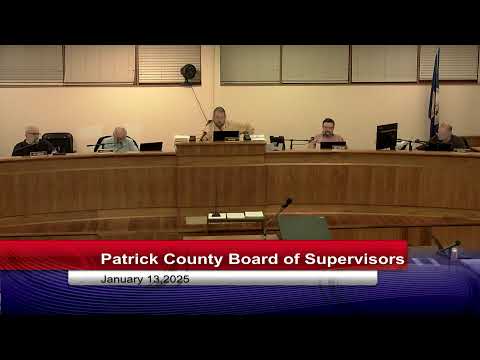
Virginia Department of Social Services officials told the Patrick County Board of Supervisors on Monday that a corrective action plan with the county’s local department has closed but that persistent staffing and resource shortfalls remain.
The presentation came from Jennifer Lilly, Western Regional Director, who introduced Carl Ayers, Deputy Commissioner of Human Services for the Virginia Department of Social Services. Ayers said the state began corrective action in May to address concerns including timely responses to abuse-and-neglect reports, in‑home services, permanency planning and the county’s management of resource (foster) homes.
“We did enter into a corrective action plan with your local department to address some ongoing concerns during this past year,” Ayers said. He told the board the state finished the corrective action plan at the end of December and has shifted to monitoring and technical assistance while asking the county to take the lead going forward.
Ayers and Lilly pressed county leaders on foster-care caseloads and staffing. Ayers said one foster-care worker in Patrick County at times carries roughly 45 cases, and that a public‑sector standard is closer to 15 cases per worker. “You need two additional positions within that to bring that caseload down to the maximum, which is 15 to 1,” he said.
Officials warned the board that the county’s pattern of paying “local‑only” resource-home payments — rather than documenting vendor relationships and meeting compliance requirements that trigger state and federal matching funds — is costing the locality money. “If you funded the staff to do the work, you would actually come out financially better off,” Ayers said, noting that missing paperwork forces the county to pay some foster expenses entirely from local funds.
Board members asked for clarification about costs. Lilly said adding positions typically carries a small local match; in the meeting she and others characterized the eligible reimbursement as heavily state‑funded (she estimated roughly 85–87% state funding in the examples discussed), with the county responsible for a significantly smaller share of salaries. The officials emphasized that state reimbursement only applies once cases and resource homes are brought into compliance.
Ayers and Lilly said the regional office had provided frequent on‑site technical assistance, data support and strategic consulting and that the department remains available to continue support while the county implements its staffing and compliance plan. Board members in the discussion encouraged aiming for lower caseloads than the 15:1 maximum and asked staff to pursue the two or three positions needed to stabilize the unit.
What’s next: State officials said they will continue to support Patrick County while monitoring caseload standards; they told the board they will feel comfortable stepping back fully once case‑load standards are reduced to manageable levels and the county handles oversight without state corrective action.