Get Full Government Meeting Transcripts, Videos, & Alerts Forever!
Get email alerts on the Building Energy Climate topic
No spam. Unsubscribe anytime.
Santa Clara suspends all‑electric reach‑code enforcement; council directs staff to draft single‑margin energy standard and pre‑wiring rules
Summary
The Santa Clara City Council voted to suspend enforcement of the city’s all‑electric reach‑code provisions and directed staff to draft a revised reach code using a single‑margin energy performance approach combined with prescriptive pre‑wiring for future electrification.
The Santa Clara City Council voted to suspend enforcement of the city’s all‑electric reach‑code provisions and directed staff to draft a revised local energy standard that would be workable under current law.
Rena Brio, director of economic development and sustainability, told the council the action responds to a Ninth Circuit ruling that overturned Berkeley’s all‑electric requirements and created legal vulnerability for similar local ordinances. Brio described three alternative approaches staff considered: a prescriptive approach (required wiring/conduit for future electrification), an energy performance or “single‑margin” approach that requires a quantified percentage improvement above the state baseline, and an air‑quality (NOx) approach that would regulate indoor emissions and effectively prohibit many gas appliances. Staff recommended the single‑margin energy performance approach combined with a prescriptive pre‑wiring requirement so future conversions to electric appliances would be easier.
Council Member Gonzales moved to adopt staff’s recommendation, with Council Member Hardy seconding; the motion included a friendly direction that staff evaluate EV “ready” charging requirements (rather than the lower bar of “EV capable”). City Manager Jevon Grogan and Assistant City Attorney Alexander Abbey explained the practical implications: suspension would pause the local all‑electric mandate while staff conducts stakeholder outreach, prepares a cost‑effectiveness analysis required by the California Energy Commission for any local reach code, and returns a revised code for council adoption. Grogan stressed the timeline is compressed because the statewide California Building Standards Code is updated on a triennial schedule and a new code release was expected later in the year.
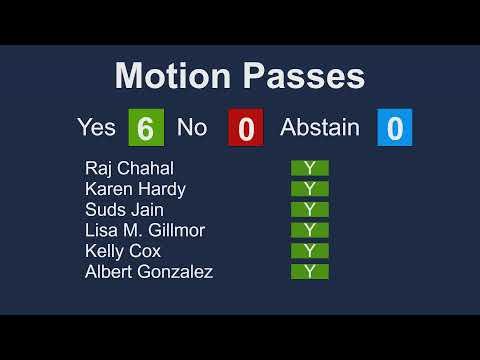
The council approved the staff motion 5–2. The recorded outcome did not list individual yes/no votes for the two opposing council members in the public roll call; the clerk announced the motion passed 5–2. After the package vote, the council also unanimously approved a separate referral directing staff to investigate “burn‑out” rules for existing equipment — for example, requiring that when a fixed, installed air conditioner is replaced it be replaced with a heat pump — and to research measures to reduce indoor NOx exposure.
Brio said the next steps, if the council’s motion stands, are stakeholder outreach in February, a revised reach‑code draft for Council consideration in March–April, a cost‑effectiveness study for the proposed amendments, subsequent submittal to the California Energy Commission and corresponding Climate Action Plan amendments. Staff emphasized the need for fast action to fill the policy gap created by the suspension and to ensure the city remains on track to meet greenhouse‑gas reduction goals.