Get Full Government Meeting Transcripts, Videos, & Alerts Forever!
Get email alerts on the Conference Takeaways topic
No spam. Unsubscribe anytime.
Rescue Union trustees report CSBA conference takeaways on literacy, AI, mental health and staff wellbeing
Summary
Trustees returned from the California School Boards Association annual conference and reported priorities the district might adopt, including literacy alignment, English-learner supports, county partnerships for student mental health and cautious exploration of artificial intelligence.
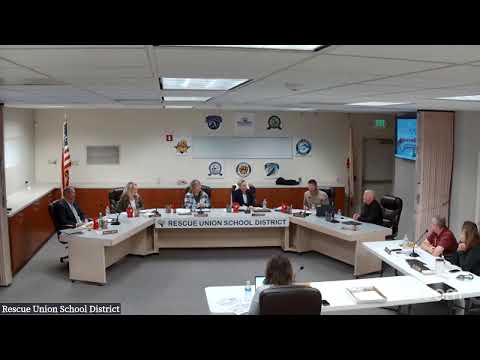
Trustees of the Rescue Union Elementary School District on Monday summarized lessons they brought back from the California School Boards Association annual conference, emphasizing literacy alignment, supports for English‑learner students, partnerships with county service providers for mental health and early planning around artificial intelligence in schools.
The trustees said the main value of the conference was time together to discuss district priorities. Trustee Jamie Beboe said she reviewed conference materials afterward and “really did take a lot away from all of my sessions and all the time we had together.” She described a San Ramon Unified presentation about a multi‑year literacy alignment process that started in upper elementary grades and worked outward to ensure standards and classroom practice matched, and she said the session reinforced the district’s focus on early literacy.
Trustee Michelle (last name not specified) attended a session organized by Yolo County officials that described a multi‑year “road map” to coordinate county departments with schools so students with intensive needs can access county services. Michelle said the session showed how partnering with county mental‑health services can free district budget capacity to expand other supports.
Trustee Flaherty, who attended sessions on safety and on AI in education, said Rescue Union “is ahead of most districts” on safety planning but noted the conference sessions framed AI as both a potential tool and a regulatory issue districts should plan for. Trustees said they have begun informal conversations with neighboring district leaders about seeking greater alignment on AI guidance across K–12 to avoid conflicting rules for students moving from elementary to high school.
Multiple trustees reported sessions on staff wellbeing and the “science of happiness,” and on budgeting and reserve management. Trustee Kim White described the district’s employee experience survey and “net promoter score,” saying the district’s internal measures on staff sentiment compared favorably to many private companies. Trustees praised the board’s opportunity to attend as a group and thanked district leadership for sponsoring the delegation.
Trustees flagged several follow‑up items they plan to pursue: review of literacy program alignment and curriculum adoption timelines, closer coordination with the high school district and county on AI policy and student transition, and continued attention to data‑driven decision making highlighted at the conference.
The study‑session discussion was informational; no formal board action was taken on conference topics.