Get Full Government Meeting Transcripts, Videos, & Alerts Forever!
Get email alerts on the Redistricting topic
No spam. Unsubscribe anytime.
Residents, civic groups say council rushed new ward maps; call process insufficient
Summary
Speakers at the Jan. 13 Cleveland City Council meeting said the council rushed the ward-redistricting process, gave residents limited opportunity to weigh in and alleged that the new lines were drawn for political advantage.
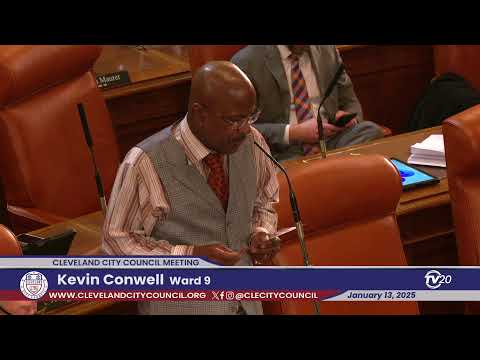
Several residents and civic advocates used the public-comment period at Cleveland City Council’s Jan. 13 meeting to criticize the council’s recently adopted ward maps, saying the redistricting process was rushed and lacked meaningful public engagement.
Brenda Bickerstaff of Ward 9 told the council, “Council, technically, is just here to write legislation. That’s it,” and urged residents to understand the limits of the council’s role while also criticizing the process used for the maps. Bickerstaff said she attended one public meeting and expressed concern that fewer council members means more territory for each councilperson.
Dean Van Ferrell of the Coalition for a Better Cleveland said the process fell short of “the finest tradition of local self government,” arguing the timing and format provided inadequate public input. “There needed to be meaningful engagement 6, 9, 12 months ago, followed by meaningful debate amongst yourselves,” he said, and added that the maps felt “heavily gerrymandered,” noting that lines were drawn in ways that, in his view, prevent former competitors’ supporters from voting for them in future races.
Fawzi Badur, speaking with the Coalition for a Better Cleveland, also criticized the maps and said neighborhood boundaries were effectively “ripped” apart, recounting his personal connection to neighborhoods affected by the changes.
Speakers asked the council to raise public-engagement standards for future redistricting and to provide more advance opportunities for residents to review proposals. Council members did not conduct additional debate on the record during the public-comment segment; the map process itself was described by commenters as already completed.