Get Full Government Meeting Transcripts, Videos, & Alerts Forever!
Get email alerts on the Telecommunications Tariff topic
No spam. Unsubscribe anytime.
Golf Manor executive committee moves to strip language that could commit village to legal costs in AT&T tariff resolution
Summary
The committee reviewed an Ohio Municipal League template opposing an AT&T tariff application and moved to remove a section the village solicitor said could be read as obligating the village to future legal or legislative costs; members discussed the state court precedent, a tight submission deadline and potential local impacts.
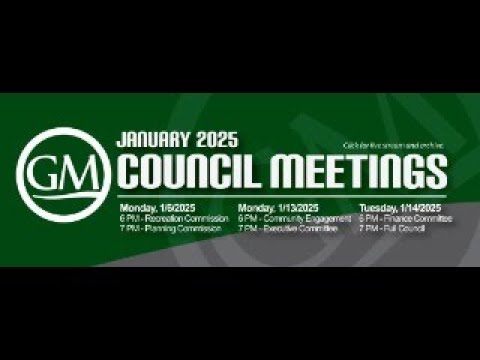
Golf Manor Village’s executive committee on Jan. 13 reviewed a rushed Ohio Municipal League template resolution opposing an AT&T tariff application and moved to recommend removing language that the village solicitor said could obligate the village to legal costs.
The committee’s action responds to outreach from the Ohio Municipal League and a pending filing with the Public Utilities Commission of Ohio (PUCO). Committee members said the state Supreme Court previously held that telephone companies are responsible for relocating facilities in the public interest, and that AT&T is seeking a tariff that could shift some relocation costs back to municipalities unless the commission rejects the request.
Committee members said the Municipal League provided a template resolution and asked municipalities to submit statements opposing the tariff on an accelerated schedule. Rob, identified in the meeting as the village solicitor, told the committee that a clause in the template (referred to in the discussion as “section 2”) could be read to authorize the village to intervene in PUCO proceedings and support subsequent legislative or legal efforts, which he said carried a potential for costs to the village. The committee discussed whether the village could sign a resolution expressing opposition while removing any language that appears to authorize payment or binding legal commitments.
Miss Mayo moved to recommend removing the portion of the template identified by the solicitor (the discussion referenced “section 2” and the final sentence of that section) before sending the resolution to full council; the motion was seconded and committee members voiced support during the meeting. The transcript does not record a roll-call vote or a formal recorded tally.
Members also discussed timing and local impact. One committee member said the tariff filing could take effect Jan. 18 if unchallenged, and noted that when a filing is made it can pause other actions; another noted that municipal customers who are not AT&T subscribers could nevertheless face charges if relocation or undergrounding work occurs in the village. Committee members referenced other fiber providers operating locally (discussion named Alta Fiber and a past Elk Brook project that reached Amberly Village) as context for potential effects on non‑AT&T customers.
Rob said he had removed the language he considered problematic from the draft resolution; committee members asked that the committee or staff review the exact final language before the full council meeting. The committee chair confirmed that Alan’s planned presentation would be moved to the Feb. 10 meeting and that the executive committee’s next meeting is Feb. 10 at 7 p.m.
The meeting transcript shows active discussion about the Ohio Municipal League template, the solicitor’s concern about cost language, and a motion to excise that language before forwarding the item. The transcript does not record a final, formal vote count on the committee’s recommendation to council.
Ending: The committee concluded by directing review of the resolution language and setting the next executive committee meeting for Feb. 10 at 7 p.m.