Get Full Government Meeting Transcripts, Videos, & Alerts Forever!
Get email alerts on the Tenant Services topic
No spam. Unsubscribe anytime.
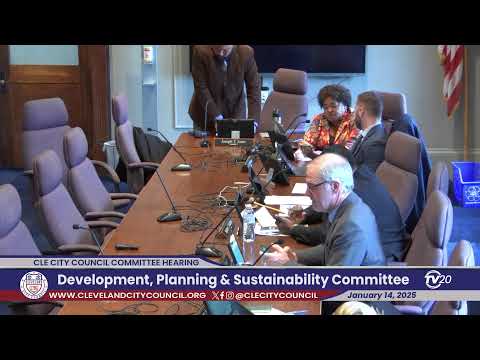
Council committee approves $1 million tenant outreach program with United Way to expand tenant services
Summary
An emergency ordinance (1197-2024) passed in committee to fund a three-year, $1 million tenant resource and outreach program administered by United Way of Greater Cleveland, expanding 211 intake, tenant education, emergency housing assistance and mediation services.
The Cleveland City Council committee approved Ordinance 1197-2024 on an emergency basis to authorize the director of community development to enter into a grant agreement with United Way of Greater Cleveland to act as the city’s fiscal agent for a tenant resource and outreach program.
The program is funded at $1,000,000 over three years and is intended to expand centralized intake through United Way’s 211 service, boost tenant education and organizing, provide emergency housing assistance and support mediation and legal services for tenants.
Why it matters: Council members and nonprofit partners said the program fills capacity lost after the Cleveland Tenants Organization folded and addresses a high volume of housing-related calls from city residents. United Way presented data showing a large existing demand for housing help and recommended a mix of education, direct organizing, emergency funds and legal/mediation resources to decrease evictions and stabilize rental households.
United Way chief development and investment officer Ken Sropp said the city is a major source of 211 calls and argued a centralized intake will help manage demand. “Two thirds of the calls that we get within the county are your residents. Of that, 92,000 are related to some sort of housing issue,” Sropp said.
Under the program design presented to the committee, 211 will serve as the central intake and navigator. Education, advocacy and organizing work will be split among community partners: 5th Christian Church will cover much of the city and the Morland’s Group will focus on Shaker Square, Buckeye and Larchmere areas. Emergency housing assistance would be provided by recommended partners (presentation materials named service providers) and mediation and legal support would come from the Cleveland Mediation Center and Legal Aid of Greater Cleveland. Cleveland State University will evaluate the initiative and United Way will serve as fiscal agent and report back to the council.
Council members emphasized implementation details. Councilwoman Stephanie Spencer asked how the new program differs from Legal Aid’s tenant information line and how the referral path would work for urgent issues such as no-heat calls. Sropp and partners said 211 provides a 24/7, year-round intake and that the program adds “boots on the ground” — organizers who can proactively do tenant outreach, convene tenants in a building and pursue collective remedies before or alongside legal referrals.
Marissa Clark of 5th Christian Church described the organizing role: she said working collectively with multiple tenants raises leverage against negligent landlords and helps ensure problems are not handled one household at a time. Danielle Cosgrove, executive director of the Cleveland Mediation Center, said mediation can occur before an eviction is filed and that mediation combined with limited rental assistance can produce faster, less adversarial resolutions.
Several council members pressed for clear performance expectations and timely contracting. Councilwoman House said she supported the program but insisted contracts not be delayed, saying, “...it should not be July before these contracts get done.” United Way said it has already held planning meetings and intends to begin outreach quickly after contracts are executed.
Funding and timeline: Committee members were told the $1,000,000 is a three-year allocation. United Way said it had designed the budget to cover intake, education/organizing, emergency housing assistance and mediation/legal outreach, and that evaluation by Cleveland State would measure demand and outcomes. United Way predicted the demand could exhaust funds sooner than three years but emphasized the evaluation will measure impact to inform any future funding decisions.
The committee approved Ordinance 1197-2024; the transcript shows the item “stands approved” after discussion. The transcript does not include a roll-call vote tally in committee.
Ending: United Way and its partner organizations will begin administrative and outreach planning immediately; partners told the committee they expect to start operations as soon as contracting and city processes are completed and that marketing and 211 promotion will be part of the rollout.