Get Full Government Meeting Transcripts, Videos, & Alerts Forever!
Lake County task force advances cannabis ordinance updates amid heated debate over farmland protections
Summary
County planners summarized a broad set of Cannabis Ordinance Task Force recommendations, from abandoned-application rules and recordkeeping to setbacks, farmer protections and a proposed expansion of a farmland protection zone that drew strong public comment from growers and neighbors.
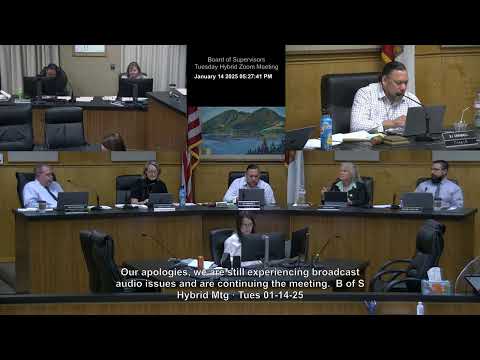
Community Development Director Mireya Turner told the Board of Supervisors that the Cannabis Ordinance Task Force has continued work on a package of changes to local cannabis rules, and she presented the group’s remaining topics for discussion.
“The original goal had been to get a draft ordinance updating or making recommendations for updating cannabis policy by the end of this last year,” Turner said. Senior planner Mary Clabaugh followed with a staff summary of outstanding items, and task force members and dozens of public commenters spoke for and against several recommendations.
Why it matters: the task force is rewriting parts of Article 27 of the Lake County Zoning Ordinance that govern cultivation, retail, processing and related cannabis uses. The recommended changes cover application handling, operational standards, recordkeeping, labor hiring rules and a disputed proposal to broaden the county’s farmland protection zone — a change that could make some existing or approved grows nonconforming and affect prospective projects, local taxes and landowners’ options.
Planners and task force members highlighted about a dozen subjects that still need policy direction. Staff proposed aligning local rules with the California Department of Cannabis Control (DCC) on recognizing abandoned or incomplete applications — using a 180-day no-contact threshold to let staff close stale files. Clabaugh also said staff are asking whether permittees should be allowed to withdraw an approved major use permit if they choose not to exercise it.
Staff flagged operational hours (beyond delivery-only restrictions now in Article 27) as an area for standardization to reduce potential traffic and noise impacts when operators want expanded hours during growing seasons. The county’s current records-retention rule requires seven years of records; planners said moving to an electronic metric-tag…
Already have an account? Log in
Subscribe to keep reading
Unlock the rest of this article — and every article on Citizen Portal.
- Unlimited articles
- AI-powered breakdowns of topics, speakers, decisions, and budgets
- Instant alerts when your location has a new meeting
- Follow topics and more locations
- 1,000 AI Insights / month, plus AI Chat