Get Full Government Meeting Transcripts, Videos, & Alerts Forever!
Get email alerts on the Local History Basketball topic
No spam. Unsubscribe anytime.
Harley Sheets recounts Lebanon basketball history, consolidation research on city podcast
Summary
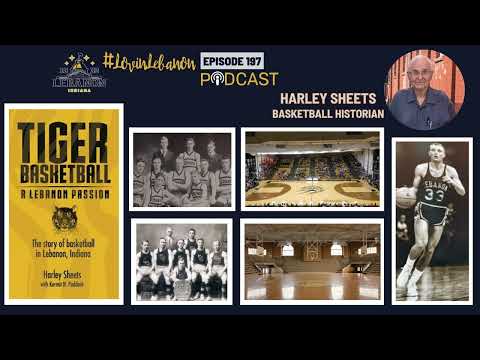
Author and former Lebanon High School player Harley Sheets discussed his books, Lebanon’s early high-school basketball prominence, coaching eras and local projects honoring the town’s basketball history on episode 197 of the Levon Lebanon podcast.
Harley Sheets, a former Lebanon High School player and local historian, told listeners on episode 197 of the Levon Lebanon podcast that he wrote a book about high school consolidations and has since documented Lebanon’s basketball history in multiple volumes.
Sheets, 90, described growing up in Detroit during World War II, returning to Lebanon as a fifth grader and being pulled into organized basketball, a start that eventually led him to research and publish local high-school basketball histories. "That's how I happened to write my first book on high school consolidations," Sheets said on the podcast.
The interview, hosted by Joe Labage, the City of Lebanon communications and community development director, touched on several topics: the early dominance of teams in what Sheets called the state’s “cradle of basketball,” anecdotes about coaches and players from Lebanon’s past, how he researched and sold his books, and recent local efforts to celebrate the town’s basketball heritage.
Why it matters: Lebanon won multiple state championships in the early decades of Indiana high-school basketball, and Sheets said the town once ranked among the state’s most successful programs. His research collects game records, team rosters and consolidation histories that local fans and researchers use to preserve the town’s sports legacy. "We used to be one of the elite teams in Indiana," Sheets said, describing Lebanon’s prominence in regional competition in the early 20th century.
Sheets described his research process — traveling to the Indiana State Library and contacting schools and newspapers — and how publicity in local columns helped sell copies of his books more than paid advertising. He told the podcast that his first book grew from persistent inquiry letters to schools and follow-up stories in local papers: "People don't read advertisements," he said, describing how a human-interest column drove interest in his work.
The conversation included historical names and episodes from Lebanon basketball: long-serving local principal and coach Butch Newman; the junior-high coach referred to in the interview as Fred "Cat" Adam; coach Bob Ignat (recounted as a later coach who reshaped teams Sheets played on); and players Sheets remembered from the 1950s era. Sheets also told a consolidation anecdote he credited to a columnist, about the origin of the Tri-West Bruins nickname and earlier debates over school nicknames.
Sheets described team and season-level details from his playing days, including a suspended-start episode in his senior year, and recounted matchups with regional rivals such as Crawfordsville, Lafayette and Frankfort. He related how changes in school sizes and suburban growth have affected competitive balance and noted possible future demographic shifts tied to local projects such as an Eli Lilly/LEAP development, which he said could alter Lebanon's athletic prospects.
The interview also covered local commemoration efforts. Sheets praised an alley-activation project on the courthouse square that honors Lebanon basketball history and the town’s first African American player; he specifically commended Missy Kirlik for organizing the alley activation. Sheets said he is helping lead a campaign to induct his former junior-high coach into the Boone County Hall of Fame.
Labage closed by inviting Sheets back for another episode to explore corrections and deeper historical details Sheets has uncovered. "We can talk a lot longer," Sheets said, adding he has research that challenges some long-held local stories and that he would like to present additional evidence in future conversations.
Ending: The episode documents one local historian’s efforts to preserve and explain Lebanon’s basketball past and points to continuing local projects — including public art and Hall of Fame nominations — that aim to keep that history visible to residents and visitors.