
JLARC: Aerospace tax preferences still reduce costs, but employment targets unclear
Get AI-powered insights, summaries, and transcripts
Subscribe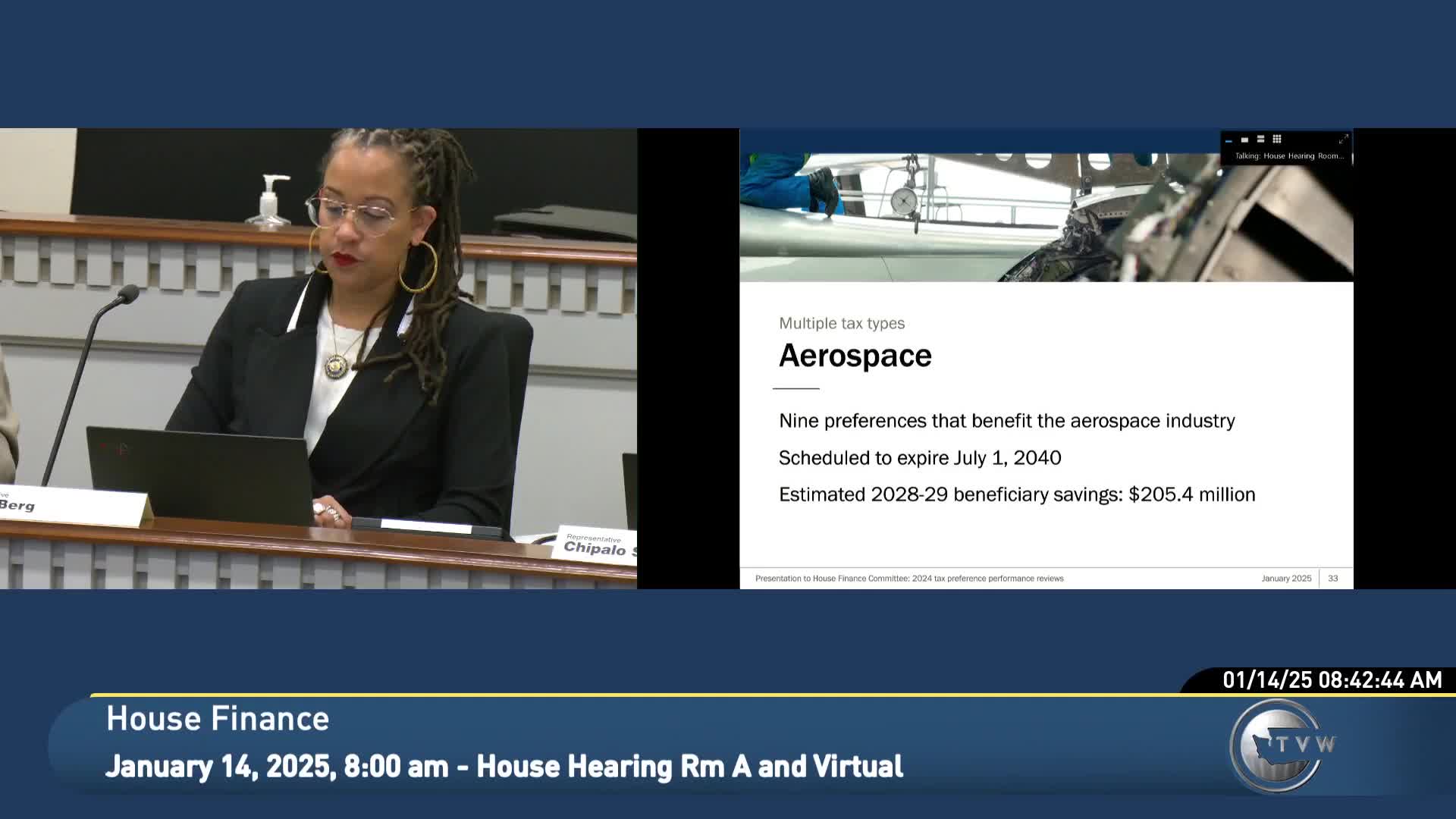
Summary
JLARC told the House Finance Committee that Washington's nine aerospace tax preferences reduce industry costs and support wages, but without defined employment targets the auditor could not determine whether preferences are meeting workforce-growth expectations.
The Joint Legislative Audit and Review Committee presented a 2024 review of nine tax preferences benefitting the aerospace industry to the House Finance Committee on Jan. 14.
JLARC reported the preferences lower effective tax costs for aerospace firms and concluded they continue to meet stated legislative goals to lower costs, maintain industry presence and encourage strong wages. The package includes preferential B&O rates, credits, sales-and-use exemptions, a property-tax exemption and a leasehold-excise-tax exemption; JLARC estimated biennial savings near $205 million for 2028–2029 under the current framework.
The review noted Washington remains a national leader in aerospace manufacturing (about $27.4 billion contribution to U.S. GDP and more than 73,000 employees across 234 establishments in 2022) and that reported average annual wages in the aerospace industry were high relative to other states ($127,000 average wage in 2022). However, JLARC said employment has fluctuated and that the Legislature has not set a clear metric for the “maintain aerospace industry employment” objective, making it impossible to state whether employment expectations are being met.
JLARC also described that a preferential rate for manufacturing/wholesaling commercial airplanes was repealed following a World Trade Organization ruling; that repeal reduced the amount saved by the package in recent years. The legislative auditor recommended clarifying legislative expectations for industry employment and suggested removing the five-year review requirement for this package and returning the preferences to the customary 10‑year review cycle unless the Legislature requests otherwise.