Get Full Government Meeting Transcripts, Videos, & Alerts Forever!
Get email alerts on the Energy Affordability topic
No spam. Unsubscribe anytime.
JLARC: Public-utility tax credit for home energy assistance reimburses a shrinking share of aid
Summary
JLARC told the House Finance Committee the $2.5 million annually capped public-utility tax credit likely does not drive utilities' low-income assistance levels; state law changes and rising energy prices have reduced the credit's relative value and usage.
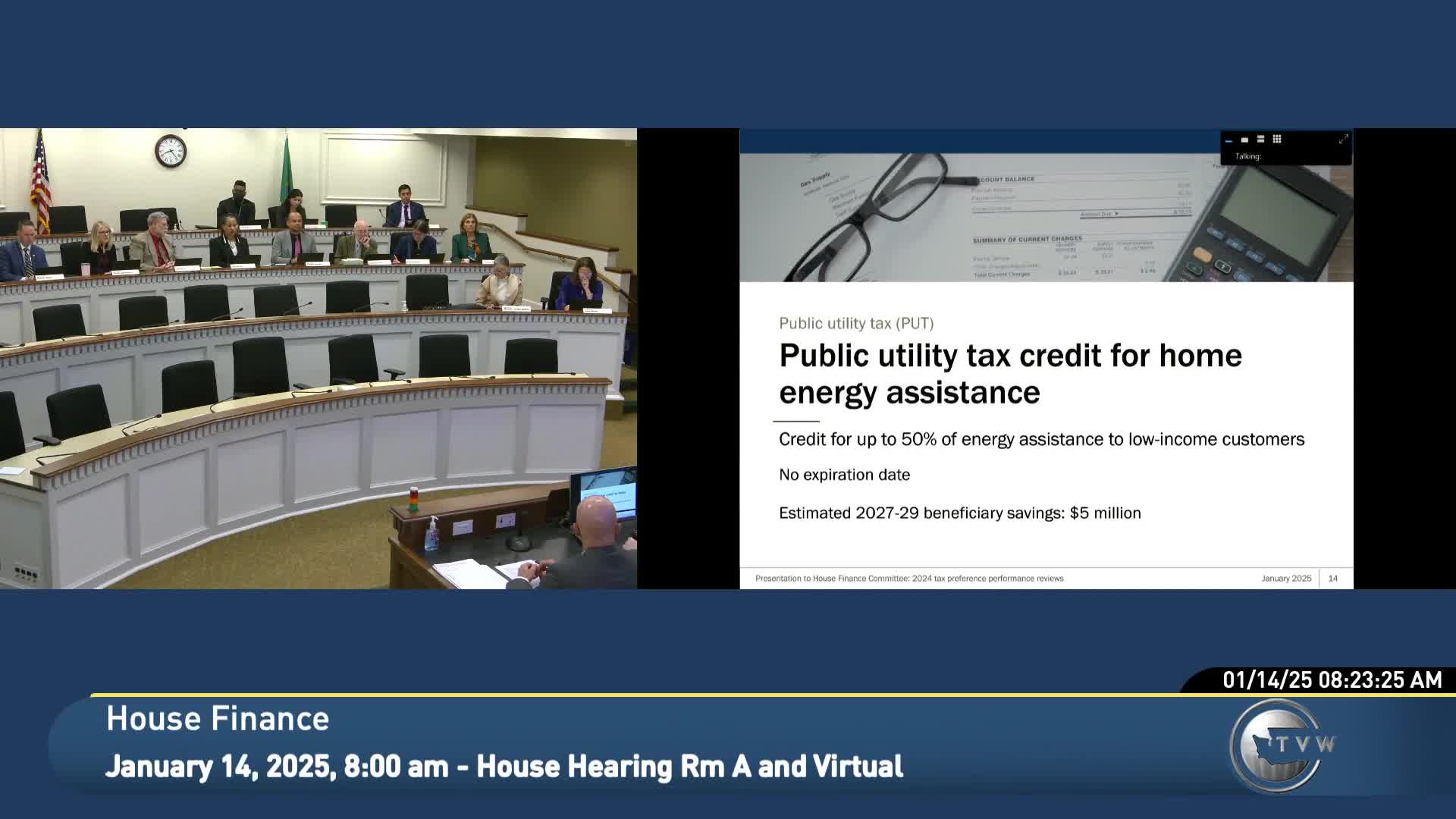
The Joint Legislative Audit and Review Committee presented a 2024 review of a public-utility tax credit for home energy assistance to the House Finance Committee on Jan. 14.
JLARC staff reported the credit reimburses up to 50 percent of energy assistance utilities provide to low‑income customers but is capped statewide at $2.5 million per year. Allocation is proportionate to federal LIHEAP distributions and the Department of Revenue allocates the credit to about 60 utilities. About 30 utilities claimed the credit annually.
The review found utilities increased energy-assistance by about 42 percent between 2018 and 2023 (from $53.6 million to $76.1 million), while the credit’s reimbursed share declined from 4.7 percent of assistance in 2018 to 3.3 percent in 2023. JLARC staff said many utilities told auditors the credit did not influence their assistance levels.
Van Moorsil and JLARC noted statute now requires utilities to offer low-income assistance and cited the Clean Energy Transformation Act and later laws (including 2021 legislation affecting investor-owned utilities) that broadened programs and recovery mechanisms. The Department of Commerce recommended terminating the preference and suggested state funds be shifted from tax expenditures to rebates and comprehensive statewide strategies to reduce energy burden.
JLARC recommended the Legislature clarify the policy objective (encouraging utilities to offer assistance versus providing tax relief) and, if the objective is assistance, consult the Department of Commerce to identify effective changes. Committee members asked whether unmet need and county-level energy burden data were considered; JLARC said Commerce’s energy assistance report addresses those measures but the credit analysis could not match assistance dollars to individual households.