Get Full Government Meeting Transcripts, Videos, & Alerts Forever!
Get email alerts on the School Funding Levy topic
No spam. Unsubscribe anytime.
Pasco district staff outline timeline, options for replacing expiring local levy
Summary
District finance staff presented an "EP&O Levy 101" briefing, explaining how educational programs and operations levies work, the district's current levy revenue and local effort assistance (LEA), and a timeline that would target a February 2026 election for a replacement levy.
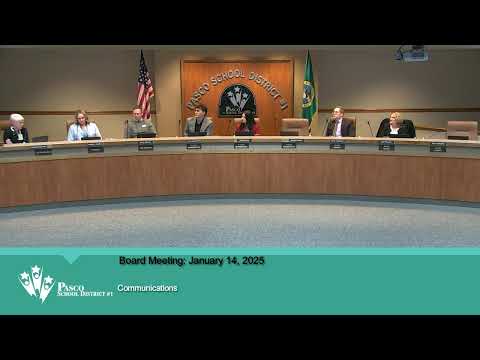
Kevin Hebden, a district finance staff member, told the Pasco School District Board on Jan. 14 that the district must plan now to replace its expiring educational programs and operations (EP&O) levy and laid out options for term, timing and voter information.
Hebden said the district's existing levy, approved in 2022, generates roughly $110,600,000 over four years and will expire Dec. 31, 2026. For the 2024–25 school year the levy is collecting about $27.4 million; in addition the district currently receives roughly $13.4 million in local effort assistance (LEA) tied to the levy, Hebden said. He noted that the levy amount that appears on the ballot is an approved dollar amount and that the levy rate reported to taxpayers is computed using assessed value in the tax district.
Why it matters: EP&O levies fund services and staff that the state’s basic education allocation does not fully cover — such as counselors, extracurriculars, school nurses, and class-size supports. Hebden warned the board that maintaining current services is likely to require a levy higher than the district’s current $1.75-per-$1,000 assessed value target because local costs are “outpacing the investment by the state.”
Key details and background: Hebden described the technical differences between bonds and levies, and said EP&O levies are limited to a maximum four-year term. He reviewed historical levy-rate changes and assessed-value growth in the district, noting that assessed value increases lower the levy rate but do not increase the approved levy dollar amount. He also explained how LEA works in broad terms as the state's attempt to equalize funding for property-poor districts; he said Pasco qualifies for LEA and that the district’s eligibility and LEA levels change with levy rate and assessed value.
Timeline and next steps: The district will work through five steps over the coming year, Hebden said: determine levy amount and term (1–4 years), select a collection year, draft an OSPI-required levy expenditure plan, consult financial advisors and bond counsel, and adopt an election resolution. He outlined a calendar that targets a Feb. 10, 2026, election date if the board approves the schedule: board action to adopt the resolution and pro/con committee appointments would occur Nov. 11, 2025, under that timeline.
Communication and public engagement: Hebden and Superintendent Whitney said communications work will begin informally but become formal after the board adopts a resolution; the district communications director will build a public outreach plan tied to the board’s decisions about amount and term. Hebden said staff will present scenarios so the board can see what different levy rates would pay for, what level of services would be preserved or cut, and what increases would be required to enhance programs.
What was not decided: The board received information and asked questions but made no decisions about levy amount, term, or an official ballot resolution. Hebden emphasized staff were not asking the board to set rates at the Jan. 14 meeting.